A scientific data-driven comprehensive review on seven prevalent species under Acacia (Fabaceae): insights into phytochemical investigation and pharmacological potentials
DOI:
https://doi.org/10.69857/joapr.v14i3.2116Keywords:
Acacia, Fabaceae, Phytochemistry, Anti-inflammatory, Cytotoxic potential, AntioxidantAbstract
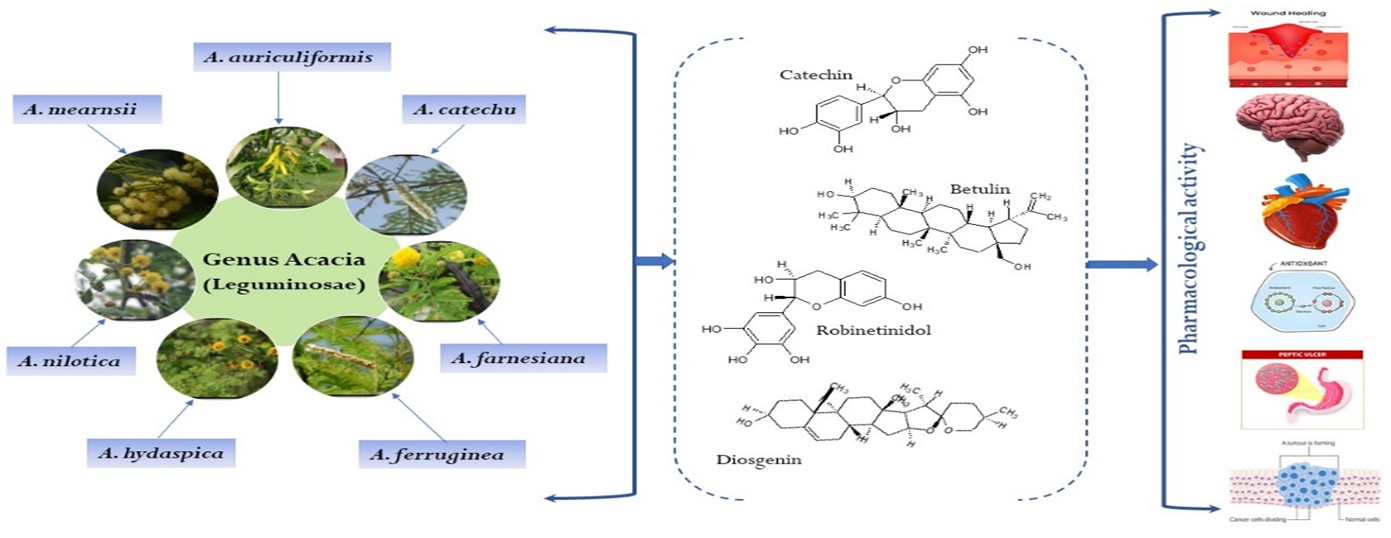
Background: In traditional medicine, plants are important. For ages, various medicinal plants have been used for traditional medicine formulations, many of which are still in use today. There are many species under the genus Acacia that are important for medicine, most of which are found in Asia. Numerous species in the genus Acacia have long been used to treat a range of conditions, from mild ailments to serious cancers. Several species in this genus have been used in pharmaceutical and cosmeceutical formulations and have achieved commercial success due to their versatile medicinal properties. Methodology: The review followed the in-depth analysis of seven prevalent Acacia species. After screening an initial pool of approximately 500 articles on these species from sources such as PubMed and Scopus (2000–2026), around 120 publications were selected based on inclusion criteria (e.g., a focus on phytochemistry/pharmacology). This timeline highlights the novelty of the review while documenting emerging findings. Result and Discussion: Numerous studies in phytochemistry, pharmacology, and toxicology have demonstrated the positive therapeutic properties of substances such as betulin, catechin, diosgenin, kaempferol, and others for illnesses. In addition, numerous novel compounds with intriguing bioactivities have been disclosed by researchers. Conclusion: The species' pharmacological investigations and phytochemical analyses have been addressed and explained. In addition, botanical description and traditional applications are briefly discussed. The isolated compounds and their biological activities are discussed. All things considered, the genus Acacia emerges as a notable source of bioactive molecules with significant potential for pharmacognostical and drug development research in the years to come, especially in oncology.
Downloads

References
Maslin BR, Miller JT, Seigler DS. Overview of the generic status of Acacia (Leguminosae: Mimosoideae). Aust. Systematic Bot., 16, 1–18 (2003) https://doi.org/10.1071/sb02008.
Murphy DJ. A review of the classification of Acacia (Leguminosae, Mimosoideae). Muelleria: An Australian Journal of Botany, 26, 10–26 (2008) https://doi.org/10.5962/p.292490.
Beech E, Rivers M, Oldfield S, Smith PP. GlobalTreeSearch: The first complete global database of tree species and country distributions. Journal of Sustainable Forestry, 36, 454–89 (2017) https://doi.org/10.1080/10549811.2017.1310049.
Duan L, Su C, Wen J, Ji Y-W, Jiang Y, Zhang T, Charboneau JLM, Fu L, Yi Q-F, Wang F-G, Tu T-Y, Li S-J, Jiang K-W, Fang Y-H, Chen H-F. New insights into the phylogenetic relationships of tribe Astragaleae (Fabaceae subfamily Papilionoideae) and Astragalus—the largest genus of angiosperm. Biological Diversity, 1, 136–46 (2024) https://doi.org/10.1002/bod2.12021.
Gomes G da S, Silva GS, Silva DL dos S, Oliveira RR de, Conceição GM da. Botanical Composition of Fabaceae Family in the Brazilian Northeast, Maranhão, Brazil. Asian Journal of Environment & Ecology, 1–10 (2018) https://doi.org/10.9734/AJEE/2018/41207.
Dey A, De JN. Traditional Use of Plants Against Snakebite in Indian Subcontinent: A Review of the Recent Literature. Afr J Tradit Complement Altern Med, 9, 153–74 (2011) https://doi.org/10.4314/ajtcam.v9i1.20.
Roy S, Das R, Mohanty J, Bhuyan N. Phytochemical Profiling and Therapeutic Potential of Acacia sinuata (Lour.) Merr.: Insights into In Vitro Haemolytic, Antioxidant and Cytotoxic Activities. Journal of Natural Remedies, 25, 121–32 (2025) https://doi.org/10.18311/jnr/2025/45067.
Madjid O. A, Sanni A, Lagnika L. Chemical Diversity and Pharmacological Properties of Genus Acacia. Asian J. of Applied Sciences, 13, 40–59 (2020) https://doi.org/10.3923/ajaps.2020.40.59.
Batiha GE-S, Akhtar N, Alsayegh AA, Abusudah WF, Almohmadi NH, Shaheen HM, Singh TG, De Waard M. Bioactive Compounds, Pharmacological Actions, and Pharmacokinetics of Genus Acacia. Molecules, 27, 7340 (2022) https://doi.org/10.3390/molecules27217340.
Hu Y-W, Liu C-Y, Du C-M, Zhang J, Wu W-Q, Gu Z-L. Induction of apoptosis in human hepatocarcinoma SMMC-7721 cells in vitro by flavonoids from Astragalus complanatus. Journal of Ethnopharmacology, 123, 293–301 (2009) https://doi.org/10.1016/j.jep.2009.03.016.
Akapo CSO, Mametja NM, Ramadwa TE, Ngwangwa H, Nemavhola F, Pandelani T, Opoku AR, Masebe TM. Review of ethnopharmacology, phytochemistry, pharmacology, and toxicity of Vachellia (Acacia) species in eastern and southern Africa. South African Journal of Botany, 185, 468–94 (2025) https://doi.org/10.1016/j.sajb.2025.07.051.
Salem MM, Davidorf FH, Abdel-Rahman MH. In vitro anti-uveal melanoma activity of phenolic compounds from the Egyptian medicinal plant Acacia nilotica. Fitoterapia, 82, 1279–84 (2011) https://doi.org/10.1016/j.fitote.2011.08.020.
Vélez-Gavilán J. Acacia auriculiformis (northern black wattle). CABI Compendium, CABI Compendium, 2157 (2016) https://doi.org/10.1079/cabicompendium.2157.
Al-Ghamdi AA, Tadesse Y, Adgaba N. Evaluation of major Acacia species in the nursery towards apicultural landscape restoration around Southwestern Saudi Arabia. Saudi Journal of Biological Sciences, 27, 3385 (2020) https://doi.org/10.1016/j.sjbs.2020.09.002.
Domínguez-Colín JA, Buendía-González L, Hernández-Jaimes C, Cruz-Sosa F, Orozco-Villafuerte J. Cytotoxic activity of callus extract from Vachellia farnesiana (L) Wight & Arn. 3 Biotech, 14, 235 (2024) https://doi.org/10.1007/s13205-024-04085-5.
Msimango NNP, Aremu AO, Amoo SO, Masondo NA. Ethnoveterinary Potential of Acacia (Vachellia and Senegalia) Species for Managing Livestock Health in Africa: From Traditional Uses to Therapeutic Applications. Plants (Basel), 14, 3107 (2025) https://doi.org/10.3390/plants14193107.
Schmerbeck J, Naudiyal N. Acacia auriculiformis. Enzyklopädie der Holzgewächse: Handbuch und Atlas der Dendrologie. (Stimm Bernd , Roloff Andreas , Lang Ulla M , Weisgerber Horst ed.), Wiley-VCH Verlag GmbH & Co. KGaA, Weinheim, Germany, pp. 1–12 (2015) https://doi.org/10.1002/9783527678518.ehg2014002
Mahato SB, Pal BC, Nandy AK. Structure elucidation of two acylated triterpenoid bisglycosides from cunn. Tetrahedron, 48, 6717–28 (1992) https://doi.org/10.1016/S0040-4020(01)80017-X.
Yoon G, Shim J-H, Kim HJ, Kim S-N, Bae M-S, Cho S-S, Kim E. Structure–activity relationship of gallic acid from Paeonia lactiflora and its synthetic analogs against human breast cancer cells. Bulletin of the Korean Chemical Society, 44, 222–9 (2023) https://doi.org/10.1002/bkcs.12657.
Silva MM, Santos MR, Caroço G, Rocha R, Justino G, Mira L. Structure-antioxidant activity relationships of flavonoids: a re-examination. Free Radic Res, 36, 1219–27 (2002) https://doi.org/10.1080/198-1071576021000016472.
Chew YL, Ling Chan EW, Tan PL, Lim YY, Stanslas J, Goh JK. Assessment of phytochemical content, polyphenolic composition, antioxidant and antibacterial activities of Leguminosae medicinal plants in Peninsular Malaysia. BMC Complement Altern Med, 11, 12 (2011) https://doi.org/10.1186/1472-6882-11-12.
Pennacchio M, Kemp AS, Taylor RP, Wickens KM, Kienow L. Interesting biological activities from plants traditionally used by Native Australians. Journal of Ethnopharmacology, 96, 597–601 (2005) https://doi.org/10.1016/j.jep.2004.10.012.
Kaur K, Arora S, Hawthorne ME, Kaur S, Kumar S, Mehta RG. A correlative study on antimutagenic and chemopreventive activity of Acacia auriculiformis a. cunn. and Acacia nilotica (l.) willd. ex del. Drug and Chemical Toxicology, 25(1), 39 – 64 (2002) https://doi.org/10.1081/DCT-100108471.
Sharma A, Shetty M, Parida A, Adiga S, Kamath S, Sowjanya. Effect of ethanolic extract of Acacia auriculiformis leaves on learning and memory in rats. Pharmacognosy Res, 6, 246–50 (2014) https://doi.org/10.4103/0974-8490.132605.
Rangra NK, Samanta S, Pradhan KK. In vivo Antiinflammatory Potential of Leaf Extracts of Acacia auriculiformis Benth. pharmaceutical-sciences, 81, (2019) https://doi.org/10.36468/pharmaceutical-sciences.562.
“India Flora Online”.: <https://indiaflora-ces.iisc.ac.in/herbsheet.php?id=57&cat=13>, cited 30 December, 2025.
Shen D, Wu Q, Wang M, Yang Y, Lavoie EJ, Simon JE. Determination of the Predominant Catechins in Acacia catechu by Liquid Chromatography/Electrospray Ionization−Mass Spectrometry. J. Agric. Food Chem., 54, 3219–24 (2006) https://doi.org/10.1021/jf0531499.
Negi BS, Dave BP. In Vitro Antimicrobial Activity of Acacia catechu and Its Phytochemical Analysis. Indian J Microbiol, 50, 369–74 (2010) https://doi.org/10.1007/s12088-011-0061-1.
Kumari M, Radha, Kumar M, Zhang B, Amarowicz R, Puri S, Pundir A, Rathour S, Kumari N, Chandran D, Dey A, Sharma N, Rajalingam S, Mohankumar P, Sandhu S, Pant N, Ravichandran RP, Subramani M, Pandi K, Muthukumar M, Zengin G, Mekhemar M, Lorenzo JM. Acacia catechu (L.f.) Willd.: A Review on Bioactive Compounds and Their Health Promoting Functionalities. Plants, 11, 3091 (2022) https://doi.org/10.3390/plants11223091.
Baranwal A, Aggarwal P, Rai A, Kumar N. Pharmacological Actions and Underlying Mechanisms of Catechin: A Review. Mini Rev Med Chem, 22, 821–33 (2022) https://doi.org/10.2174/1389557521666210902162120.
Jain S, Vaidya A. Comprehensive review on pharmacological effects and mechanism of actions of taxifolin: A bioactive flavonoid. Pharmacological Research - Modern Chinese Medicine, 7, 100240 (2023) https://doi.org/10.1016/j.prmcm.2023.100240.
Nair A, Chattopadhyay D, Saha B. Plant-Derived Immunomodulators. New Look to Phytomedicine. Elsevier, pp. 435–99 (2019) https://doi.org/10.1016/B978-0-12-814619-4.00018-5
Patil A, Modak M. Comparative Evaluation of Oxidative Stress Modulating and DNA Protective Activities of Aqueous and Methanolic Extracts of Acacia catechu. Medicines, 4, 65 (2017) https://doi.org/10.3390/medicines4030065.
Patel JD, Kumar V, Bhatt SA. Antimicrobial screening and phytochemical analysis of the resin part of Acacia catechu. Pharmaceutical Biology, 47(1), 34–37 (2009) https://doi.org/10.1080/13880200802400527.
Waseem U, Jafri SR, Khalid S, Qureshi F, Majeed N, Akif U. Anti-inflammatory activity of acacia catechu-bark aqueous solution in aspirin induced gastric ulcer in rodents. International Journal Of Community Medicine And Public Health, 8, 5649–54 (2021) https://doi.org/10.18203/2394-6040.ijcmph20214551.
Jyoti, Garg V. Acacia catechu Willd. and Acacia arabica Willd. decrease the extent of anxiety behavior by reducing oxidative stress and moderating neurochemicals. Journal of Ethnopharmacology, 312, 116496 (2023) https://doi.org/10.1016/j.jep.2023.116496.
Ray D, Sharatchandra K, Thokchom IS. Antipyretic, antidiarrhoeal, hypoglycaemic and hepatoprotective activities of ethyl acetate extract of Acacia catechu Willd. in albino rats. Indian Journal of Pharmacology, 38, 408 (2006) https://doi.org/10.4103/0253-7613.28207.
Lakshmi T, Ramasamy R, Thirumalaikumaran R, Thirumalaikumaran R. Preliminary Phytochemical analysis and In vitro Antioxidant, FTIR Spectroscopy, Anti-diabetic activity of Acacia catechu ethanolic seed extract. Pharmacognosy Journal, 7, 356–62 (2015) https://doi.org/10.5530/pj.2015.6.7.
Nadumane V, Nair S. Evaluation of the anticancer and cytotoxic potentials of Acacia catechu extracts in vitro. Journal of Natural Pharmaceuticals, 2, 190–190 (2011) https://doi.org/10.4103/2229-5119.92857
Clarke HD, Seigler DS, Ebinger JE. Acacia farnesiana (Fabaceae: Mimosoideae) and Related Species from Mexico, the Southwestern U.S., and the Caribbean. Systematic Botany, 14, 549 (1989) https://doi.org/10.2307/2419000.
Campos CCZ-, García-Martínez JE, Chavira JS, Valdés JAA, Morales MAM, Mellado M. Chemical composition and nutritional value of leaves and pods of Leucaena leucocephala, Prosopis laevigata and Acacia farnesiana in a xerophilous shrubland. Emirates Journal of Food and Agriculture, 723–30 (2020) https://doi.org/10.9755/ejfa.2020.v32.i10.2148.
Zarza-Albarrán MA, Olmedo-Juárez A, Rojo-Rubio R, Mendoza-de Gives P, González-Cortazar M, Tapia-Maruri D, Mondragón-Ancelmo J, García-Hernández C, Blé-González EA, Zamilpa A. Galloyl flavonoids from Acacia farnesiana pods possess potent anthelmintic activity against Haemonchus contortus eggs and infective larvae. Journal of Ethnopharmacology, 249, 112402 (2020) https://doi.org/10.1016/j.jep.2019.112402.
Claudia D, Mario C-H, Arturo N, Omar Noel M-C, Antonio N, Teresa R, Zenón Gerardo L-T, Margarita D, Marsela Alejandra Á-I, Yessica Rosalina C, Vanessa S-Q, Francisco Enrique G, Torre-Villalvazo I, Janette F, María Del Rayo C-C, José P-C. Phenolic Compounds in Organic and Aqueous Extracts from Acacia farnesiana Pods Analyzed by ULPS-ESI-Q-oa/TOF-MS. In Vitro Antioxidant Activity and Anti-Inflammatory Response in CD-1 Mice. Molecules, 23, 2386 (2018) https://doi.org/10.3390/molecules23092386.
Ramli S, Harada K, Ruangrungsi N. Antioxidant, Antimicrobial and Cytotoxicity Activities of Acacia farnesiana (L.) Willd. Leaves Ethanolic Extract. Pharmacognosy Journal, 3, 50–8 (2011) https://doi.org/10.5530/pj.2011.23.8.
Han G, Lee DG. Antibacterial Mode of Action of β-Amyrin Promotes Apoptosis-Like Death in Escherichia coli by Producing Reactive Oxygen Species. J Microbiol Biotechnol, 32, 1547–52 (2022) https://doi.org/10.4014/jmb.2209.09040.
Mlala S, Oyedeji AO, Gondwe M, Oyedeji OO. Ursolic Acid and Its Derivatives as Bioactive Agents. Molecules, 24, 2751 (2019) https://doi.org/10.3390/molecules24152751.
Hernández-García E, García A, Garza-González E, Avalos-Alanís FG, Rivas-Galindo VM, Rodríguez-Rodríguez J, Alcantar-Rosales VM, Delgadillo-Puga C, del Rayo Camacho-Corona M. Chemical composition of Acacia farnesiana (L) wild fruits and its activity against Mycobacterium tuberculosis and dysentery bacteria. Journal of Ethnopharmacology, 230, 74–80 (2019) https://doi.org/10.1016/j.jep.2018.10.031.
Leal LSS, Silva RO, Araujo TSL, Silva VG, Barbosa ALR, Medeiros JVR, Oliveira JS, Ventura CA. The anti-inflammatory and antinociceptive effects of proteins extracted from Acacia farnesiana seeds. Rev. bras. plantas med., 18, 38–47 (2016) https:/doi.org/10.1590/1983-084X/15_018.
Yallappa S, Manjanna J, Peethambar SK, Rajeshwara AN, Satyanarayan ND. Green Synthesis of Silver Nanoparticles Using Acacia farnesiana (Sweet Acacia) Seed Extract Under Microwave Irradiation and Their Biological Assessment. J Clust Sci, 24, 1081–92 (2013) https://doi.org/10.1007/s10876-013-0599-7.
H Saleema N, R Abdelhalimb A, M Alghou A, H. Abdel-Rhman S. In-vitro antimicrobial activity of Acacia farnesiana & Rosmarinus officinalis crude extract and isolated compounds against foodborne pathogens. IJMSSSR, 05, 420–6 (2023) https://doi.org/10.56293/IJMSSSR.2022.4653.
Delgadillo Puga C, Cuchillo Hilario M, Espinosa Mendoza JG, Medina Campos O, Molina Jijón E, Díaz Martínez M, Álvarez Izazaga MA, Ledesma Solano JÁ, Pedraza Chaverri J. Antioxidant activity and protection against oxidative-induced damage of Acacia shaffneri and Acacia farnesiana pods extracts: in vitro and in vivo assays. BMC Complement Altern Med, 15, 435 (2015) https://doi.org/10.1186/s12906-015-0959-y.
Cariño-Cervantes YY, Guevara-Cruz M, Medina-Campos ON, Pedraza-Chaverri J, Castillo-Martínez L, Ramírez V, Montaño-Benavidez S, Martagón AJ, Almeda-Valdes P, Cisneros-Zevallos L, Aguilar-Salinas CA, Delgadillo-Puga C. Pilot Trial of Vachellia farnesiana Pod Polyphenol Extract: Feasibility, Acute Postprandial Glycemic Response, and Incretin Hormone Modulation in Healthy Adults. Current Developments in Nutrition, 10, 107670 (2026) https://doi.org/10.1016/j.cdnut.2026.107670.
Faujdar S, Sati B, Sharma S, Pathak AK, Paliwal SK. Phytochemical evaluation and anti-hemorrhoidal activity of bark of Acacia ferruginea DC. Journal of Traditional and Complementary Medicine, 9, 85–9 (2019) https://doi.org/10.1016/j.jtcme.2018.02.003.
Jeevitha M, Ravi PV, Subramaniyam V, Pichumani M, Sripathi SK. Exploring the phyto- and physicochemical evaluation, fluorescence characteristics, and antioxidant activities of Acacia ferruginea Dc: an endangered medicinal plant. Futur J Pharm Sci, 7, 228 (2021) https://doi.org/10.1186/s43094-021-00375-4.
Faujdar S, Sharma S, Sati B, Pathak AK, Paliwal SK. Comparative analysis of analgesic and anti-inflammatory activity of bark and leaves of Acacia ferruginea DC. Beni-Suef University Journal of Basic and Applied Sciences, 5, 70–8 (2016) https://doi.org/10.1016/j.bjbas.2016.02.002.
Sakthivel KM, Guruvayoorappan C. Acacia ferruginea inhibits inflammation by regulating inflammatory iNOS and COX-2. Journal of Immunotoxicology, 13, 127–35 (2016) https://doi.org/10.3109/1547691X.2015.1017625.
Deb J, Singh A, Rathore DS, Dash GK, Deb NK. Studies on antidiabetic activity of Acacia ferruginea DC. stem bark. IJPBR, 3, 11–5 (2015) https://doi.org/10.30750/ijpbr.3.4.3.
Sowndhararajan K, Kang SC. Protective effect of ethyl acetate fraction of Acacia ferruginea DC. against ethanol-induced gastric ulcer in rats. Journal of Ethnopharmacology, 148, 175–81 (2013) https://doi.org/10.1016/j.jep.2013.04.007.
Sakthivel KM, Guruvayoorappan C. Acacia ferruginea inhibits tumor progression by regulating inflammatory mediators-(TNF-a, iNOS, COX-2, IL-1β, IL-6, IFN-γ, IL-2, GM-CSF) and pro-angiogenic growth factor- VEGF. Asian Pac J Cancer Prev, 14, 3909–19 (2013) https://doi.org/10.7314/apjcp.2013.14.6.3909.
Sakthivel KM, Guruvayoorappan C. Protective Effect of Acacia ferruginea against Ulcerative Colitis via Modulating Inflammatory Mediators, Cytokine Profile and NF-κB Signal Transduction Pathways. JEP(T), 33, (2014) https://doi.org/10.1615/JEnvironPatholToxicolOncol.2014008425.
Sowndhararajan K, Hong S, Jhoo J-W, Kim S, Chin NL. Effect of acetone extract from stem bark of Acacia species (A. dealbata, A. ferruginea and A. leucophloea) on antioxidant enzymes status in hydrogen peroxide-induced HepG2 cells. Saudi Journal of Biological Sciences, 22, 685–91 (2015) https://doi.org/10.1016/j.sjbs.2015.03.010.
M J, Ravi PV, Subramaniyam V, Pichumani M, Sripathi SK. Biomimetic syntheses of silver nanoparticles using A. ferruginea bark extracts and tenable approaches for developing anti-infectives. Appl Nanosci, 12, 2579–94 (2022) https://doi.org/10.1007/s13204-022-02570-y.
Afsar T, Razak S, Aldisi D, Shabbir M, Almajwal A, Al Kheraif AA, Arshad M. Acacia hydaspica R. Parker ethyl-acetate extract abrogates cisplatin-induced nephrotoxicity by targeting ROS and inflammatory cytokines. Sci Rep, 11, 17248 (2021) https://doi.org/10.1038/s41598-021-96509-y.
Afsar T, Razak S, Khan MR, Mawash S, Almajwal A, Shabir M, Haq IU. Evaluation of antioxidant, anti-hemolytic and anticancer activity of various solvent extracts of Acacia hydaspica R. Parker aerial parts. BMC Complementary and Alternative Medicine, 16, 258 (2016) https://doi.org/10.1186/s12906-016-1240-8.
Afsar T, Razak S, Shabbir M, Khan MR. Antioxidant activity of polyphenolic compounds isolated from ethyl-acetate fraction of Acacia hydaspica R. Parker. Chemistry Central Journal, 12, 5 (2018) https://doi.org/10.1186/s13065-018-0373-x.
Chhillar R, Dhingra D. Antidepressant‐like activity of gallic acid in mice subjected to unpredictable chronic mild stress. Fundamemntal Clinical Pharma, 27, 409–18 (2013) https://doi.org/10.1111/j.1472-8206.2012.01040.x.
Afsar T, Razak S, Almajwal A. Reversal of cisplatin triggered neurotoxicity by Acacia hydaspica ethyl acetate fraction via regulating brain acetylcholinesterase activity, DNA damage, and pro-inflammatory cytokines in the rodent model. BMC Complement Med Ther, 22, 179 (2022) https://doi.org/10.1186/s12906-022-03657-3.
Afsar T, Razak S, Khan MR, Almajwal A. Anti-depressant and anxiolytic potential of Acacia hydaspica R. Parker aerial parts extract: Modulation of brain antioxidant enzyme status. BMC Complement Altern Med, 17, 228 (2017) https://doi.org/10.1186/s12906-017-1671-x.
Baishya D, Choudhury A, Deka H, Hoque N, Jyrwa R, Sarmah J. Preparation of Herbal Hair Oil Exploring the Therapeutic Benefits of Herbs and Its Evaluation. J. Appl. Pharm. Res., 12, 116–27 (2024) https://doi.org/10.18231/j.joapr.2024.12.1.116.127.
Cheng M-C, Lu Y-C, Wu J, Ma Y-H. Gallate-induced nanoparticle uptake by tumor cells: Structure-activity relationships. Colloids Surf B Biointerfaces, 179, 28–36 (2019) https://doi.org/10.1016/j.colsurfb.2019.03.048.
Afsar T, Razak S, Almajwal A, Shabbir M, Khan MR. Evaluating the protective potency of Acacia hydaspica R. Parker on histological and biochemical changes induced by Cisplatin in the cardiac tissue of rats. BMC Complement Altern Med, 19, 182 (2019) https://doi.org/10.1186/s12906-019-2575-8.
Foyzun T, Mahmud AA, Ahammed MS, Manik MIN, Hasan MK, Islam KM, Lopa SS, Al-Amin MY, Biswas K, Afrin MR, et al. Polyphenolics with Strong Antioxidant Activity from Acacia nilotica Ameliorate Some Biochemical Signs of Arsenic-Induced Neurotoxicity and Oxidative Stress in Mice. Molecules. 2022; 27(3):1037. https://doi.org/10.3390/molecules27031037
Amit Kumar, Sushil Kumar, Mukesh Kr Singh, Sunil Kumar Tiwari, A comprehensive review on the chemical composition and pharmacological activities of ACACIA ARABICA, Intelligent Pharmacy, 5, (2024), https://doi.org/10.1016/j.ipha.2024.01.008.
Dogara AM, Hama HA, Ozdemir M. Biological evaluation of Acacia nilotica (L.) Willd. ex Delile: a systematic review. ADV TRADIT MED (ADTM), 24, 1–39 (2024) https://doi.org/10.1007/s13596-023-00683-5.
Hafez LO, Brito-Casillas Y, Abdelmageed N, Alemán-Cabrera IM, Morad SAF, Abdel-Raheem MH, Wägner AM. The Acacia (Vachellia nilotica (L.) P.J.H. Hurter & Mabb.): Traditional Uses and Recent Advances on Its Pharmacological Attributes and Potential Activities. Nutrients, 16, 4278 (2024) https://doi.org/10.3390/nu16244278.
Gadilohar NR, Girase AM, Suryawanshi HP, Pawar SP. A Descriptive Study of Acacia nilotica Linn. Asian Jour. Pharmac. Rese., 8, 170 (2018) https://doi.org/10.5958/2231-5691.2018.00030.8.
Abbasian K, Asgarpanah J, Ziarati P. Chemical Composition profile of Acacia nilotica Seed Growing Wild in South of Iran. Orient. J. Chem, 31, 1027–33 (2015) https://doi.org/10.13005/ojc/310251.
Chaubal R, Pawar PV, Hebbalkar GD, Tungikar VB, Puranik VG, Deshpande VH, Deshpande NR. Larvicidal Activity ofAcacia nilotica Extracts and Isolation ofD-Pinitol - A Bioactive Carbohydrate. C&B, 2, 684–8 (2005) https://doi.org/10.1002/cbdv.200590044.
Sundarraj S, Thangam R, Sreevani V, Kaveri K, Gunasekaran P, Achiraman S, Kannan S. γ-Sitosterol from Acacia nilotica L. induces G2/M cell cycle arrest and apoptosis through c-Myc suppression in MCF-7 and A549 cells. Journal of Ethnopharmacology, 141, 803–9 (2012) https://doi.org/10.1016/j.jep.2012.03.014.
Rehman NU, Ansari MN, Ahmad W, Amir M. GC–MS Analysis and In Vivo and Ex Vivo Antidiarrheal and Antispasmodic Effects of the Methanolic Extract of Acacia nilotica. Molecules, 27, 2107 (2022) https://doi.org/10.3390/molecules27072107.
Kaur P, Arora S, Singh R. Isolation, characterization and biological activities of betulin from Acacia nilotica bark. Sci Rep, 12, 9370 (2022) https://doi.org/10.1038/s41598-022-13338-3.
Zheleva-Dimitrova D, Sinan KI, Etienne OK, Ak G, Sharmeen JB, Dervisoglu G, Ozdemir FA, Mahomoodally MF, Zengin G. Comprehensive chemical characterization and biological evaluation of two Acacia species: A. nilotica and A. ataxacantha. Food and Chemical Toxicology, 156, 112446 (2021) https://doi.org/10.1016/j.fct.2021.112446.
Alambayan J, Vats M, Sood P, Kaur G, Khan H, Devi S. Antiulcer and antioxidant activity of Acacia arabica extract in alcohol and NSAIDS-induced gastric injury in animal model. Comp Clin Pathol, 33, 823–35 (2024) https://doi.org/10.1007/s00580-024-03600-7.
Baishya D, Choudhury A, Deka H, Hoque N, Jyrwa R, Sarmah J. Preparation of Herbal Hair Oil Exploring the Therapeutic Benefits of Herbs and Its Evaluation. J. Appl. Pharm. Res., 12, 116–27 (2024) https://doi.org/10.18231/j.joapr.2024.12.1.116.127.
Ansari P, Islam SS, Akther S, Khan JT, Shihab JA, Abdel-Wahab YHA. Insulin secretory actions of ethanolic extract of Acacia arabica bark in high fat-fed diet-induced obese Type 2 diabetic rats. Bioscience Reports, 43, BSR20230329 (2023) https://doi.org/10.1042/BSR20230329.
Alduraihem NS, Bhat RS, Al-Zahrani SA, Elnagar DM, Alobaid HM, Daghestani MH. Anticancer and Antimicrobial Activity of Silver Nanoparticles Synthesized from Pods of Acacia nilotica. Processes, 11, 301 (2023) https://doi.org/10.3390/pr11020301.
Adepoju FO, Duru KC, Li E, Kovaleva EG, Tsurkan MV. Pharmacological Potential of Betulin as a Multitarget Compound. Biomolecules, 13, 1105 (2023) https://doi.org/10.3390/biom13071105.
Andhare A, Bharambe S, Pawar A, Sutar D. Antimicrobial Sensitivity of Plant Extracts of Acacia arabica, Prosopis juliflora, Abutilon indicum, and Bryonia laciniosa on Staphylococcus aureus, Pseudomonas aeruginosa, and Escherichia coli. Qeios, (2023) https://doi.org/10.32388/HMXWSL.
Hassan AU, Garba S, Fatima Y, Aliyu F, Kereakede E, Ada IO. in vivo Antibacterial Activity of Acacia nilotica Phenolics Against Extreme Multidrug Resistant Pseudomonas aeruginosa Strains. USci, 5, 212–28 (2026) https://doi.org/10.56919/usci.2651.018.
Ali R, Tabrez S, Rahman F, Alouffi AS, Alshehri BM, Alshammari FA, Alaidarous MA, Banawas S, Dukhyil AAB, Rub A. Antileishmanial Evaluation of Bark Methanolic Extract of Acacia nilotica : In Vitro and In Silico Studies. ACS Omega, 6, 8548–60 (2021) https://doi.org/10.1021/acsomega.1c00366.
Omara EA, Nada SA, Farrag ARH, Sharaf WM, El-Toumy SA. Therapeutic effect of Acacia nilotica pods extract on streptozotocin induced diabetic nephropathy in rat. Phytomedicine, 19, 1059–67 (2012) https://doi.org/10.1016/j.phymed.2012.07.006.
Manoharan J, Chinnakannu NK, Ranganathan B. Phytochemical screening, Antiradical and Anti-inflammatory activity of aqueous bark extract acquired from Acacia nilotica. Research Journal of Pharmacy and Technology, 16, 4831–5 (2023) https://doi.org/10.52711/0974-360X.2023.00783.
Safari VZ, Kamau JK, Nthiga PM, Ngugi MP, Orinda G, Njagi EM. Antipyretic, Antiinflammatory and Antinociceptive Activities of Aqueous Bark Extract of Acacia Nilotica (L.) Delile in Albino Mice. Journal of Pain Management & Medicine, 2, 1–7 (2016) https://doi.org/10.35248/2684-1320.16.2.113.
Rauf A, Ibrahim M, Alomar TS, AlMasoud N, Khalil AA, Khan M, Khalid A, Jan MS, Formanowicz D, Quradha MM. Hypoglycemic, anti‐inflammatory, and neuroprotective potentials of crude methanolic extract from Acacia nilotica L. – results of an in vitro study. Food Science & Nutrition, 12, 3483–91 (2024) https://doi.org/10.1002/fsn3.4017.
Sadiq MB, Tharaphan P, Chotivanich K, Tarning J, Anal AK. In vitro antioxidant and antimalarial activities of leaves, pods and bark extracts of Acacia nilotica (L.) Del. BMC Complement Altern Med, 17, 372 (2017) https://doi.org/10.1186/s12906-017-1878-x.
Mwangengwa LM, Bakari GG, Kanuya NL, Max RA. Antifertility effects of crude extracts from Acacia nilotica pods and Albizia lebbeck stem bark in female multimammate rats, Mastomys natalensis. JPAP, 12, 1–10 (2021) https://doi.org/10.5897/JPAP2021.0137.
Richardson DM, Binggeli P, Botella C. Australian Acacia Species in Africa. Wattles. (Richardson David M , Roux Johannes J Le , Marchante Elizabete ed.), CABI, GB, pp. 181–200 (2023) https://doi.org/10.1079/9781800622197.0012
Mengistu AG, Tesfuhuney WA, Woyessa YE, Steyn AS. Potential distribution of selected invasive alien plants under current and future climate change scenarios in South Africa. Heliyon, 9, (2023) https://doi.org/10.1016/j.heliyon.2023.e19867.
Giri S, Sahu R, Paul P, Nandi G, Dua TK. An updated review on Eupatorium adenophorum Spreng. : traditional uses, phytochemistry, pharmacological activities and toxicity. Pharmacological Research - Modern Chinese Medicine, 2, 100068 (2022) https://doi.org/10.1016/j.prmcm.2022.100068.
MacKenzie AM. The flavonoids of the leaves of Acacia mearnsii. Phytochemistry, 8, 1813–5 (1969) https://doi.org/10.1016/S0031-9422(00)85974-9.
Roux DG. Recent advances in the chemistry and chemical utilization of the natural condensed tannins. Phytochemistry, 11, 1219–30 (1972) https://doi.org/10.1016/S0031-9422(00)90068-2.
Saayman HM, Roux DG. The origins of tannins and flavonoids in black-wattle barks and heartwoods, and their associated “non-tannin” components. Biochem J, 97, 794–801 (1965) https://doi.org/10.1042/bj0970794.
Xiong J, Grace MH, Esposito D, Komarnytsky S, Wang F, Lila MA. Polyphenols isolated from Acacia mearnsii bark with anti-inflammatory and carbolytic enzyme inhibitory activities. Chin J Nat Med, 15, 816–24 (2017) https://doi.org/10.1016/S1875-5364(18)30015-3.
Uushona T, Chikwanha OC, Tayengwa T, Katiyatiya CLF, Strydom PE, Mapiye C. Nutraceutical and preservative potential of Acacia mearnsii and Acacia dealbata leaves for ruminant production and product quality enhancement. J. Agric. Sci., 159, 743–56 (2021) https://doi.org/10.1017/S0021859621001015.
Olajuyigbe OO, Afolayan AJ. In vitro antibacterial and time-kill assessment of crude methanolic stem bark extract of Acacia mearnsii de wild against bacteria in shigellosis. Molecules, 17, 2103–18 (2012) https://doi.org/10.3390/molecules17022103.
Xiong J, Grace MH, Esposito D, Wang F, Lila MA. Phytochemical characterization and anti-inflammatory properties of Acacia mearnsii leaves. Natural Product Communications, 11, 649–53 (2016) https://doi.org/10.1177/1934578x1601100524 .
Wu C, He L, Zhang Y, You C, Li X, Jiang P, Wang F. Separation of flavonoids with significant biological activity from Acacia mearnsii leaves. RSC Advances, 13, 9119–27 (2023) https://doi.org/10.1039/D3RA00209H.
Shen X, Wang Y, Wang F. Characterisation and biological activities of proanthocyanidins from the barks of Pinus massonian and Acacia mearnsii. Natural Product Research, 24, 590–8 (2010) https://doi.org/10.1080/14786410903194472.
Chen X, Xiong J, He L, Zhang Y, Li X, Zhang L, Wang F. Effects of In Vitro Digestion on the Content and Biological Activity of Polyphenols from Acacia mearnsii Bark. Molecules, 23, 1804 (2018) https://doi.org/10.3390/molecules23071804.
Jakimiuk K. A Comprehensive Review of Robinetin: Distribution, Biological Activity and Pharmacokinetic Parameters. International Journal of Molecular Sciences, 26, 9546 (2025) https://doi.org/10.3390/ijms26199546.
Avoseh ON, Oyedeji OO, Aremu K, Nkeh-Chungag BN, Songca SP, Oluwafemi SO, Oyedeji AO. Chemical composition and anti-inflammatory activities of the essential oils from Acacia mearnsii de Wild. Natural Product Research, 29, 1184–8 (2015) https://doi.org/10.1080/14786419.2014.983504.
Avoseh ON, Oyedeji OO, Aremu O, Nkeh-Chungag BN, Songca SP, Oyedeji AO, Mohan S, Oluwafemi OS. Biosynthesis of silver nanoparticles from Acacia mearnsii De Wild stem bark and its antinociceptive properties. Green Chemistry Letters and Reviews, 10, 59–68 (2017) https://doi.org/10.1080/17518253.2017.1287310.
Chen X, Xiong J, Huang S, Li X, Zhang Y, Zhang L, Wang F. Analytical Profiling of Proanthocyanidins from Acacia mearnsii Bark and In Vitro Assessment of Antioxidant and Antidiabetic Potential. Molecules, 23, 2891 (2018) https://doi.org/10.3390/molecules23112891.
Ikarashi N, Takeda R, Ito K, Ochiai W, Sugiyama K. The Inhibition of Lipase and Glucosidase Activities by Acacia Polyphenol. Evidence-Based Complementary and Alternative Medicine, 2011, 272075 (2011) https://doi.org/10.1093/ecam/neq043.
dos Santos C, Vargas Á, Fronza N, dos Santos JHZ. Structural, textural and morphological characteristics of tannins from Acacia mearnsii encapsulated using sol-gel methods: Applications as antimicrobial agents. Colloids and Surfaces B: Biointerfaces, 151, 26–33 (2017) https://doi.org/10.1016/j.colsurfb.2016.11.041.
Olajuyigbe OO, Afolayan AJ. Pharmacological Assessment of the Medicinal Potential of Acacia mearnsii De Wild.: Antimicrobial and Toxicity Activities. IJMS, 13, 4255–67 (2012) https://doi.org/10.3390/ijms13044255.
Takagi K, Mitsunaga T. Tyrosinase inhibitory activity of proanthocyanidins from woody plants. J Wood Sci, 49, 461–5 (2003) https://doi.org/10.1007/s10086-002-0496-4.
Huang W, Niu H, Xue X, Li J, Li C. Robinetinidol-(4β→8)-epigallocatechin 3-O-gallate, A Galloyl Dimer Prorobinetinidin From Acacia Mearnsii De Wild, Effectively Protects Human Neuroblastoma SH-SY5Y Cells Against Acrolein-Induced Oxidative Damage. Journal of Alzheimer’s Disease, (2010) https://doi.org/10.3233/JAD-2010-090886
Olajuyigbe OO, Coopoosamy RM. Influence of First‐Line Antibiotics on the Antibacterial Activities of Acetone Stem Bark Extract of Acacia mearnsii De Wild. against Drug‐Resistant Bacterial Isolates. Evidence-Based Complementary and Alternative Medicine, 2014, 423751 (2014) https://doi.org/10.1155/2014/423751.
Klug TV, Novello J, Laranja DC, Aguirre TAS, De Oliveira Rios A, Tondo EC, Santos RPD, Bender RJ. Effect of Tannin Extracts on Biofilms and Attachment of Escherichia coli on Lettuce Leaves. Food Bioprocess Technol, 10, 275–83 (2017) https://doi.org/10.1007/s11947-016-1812-0.
Zhou L, Bi Y, Jiang L, Wang Z, Chen W. Effect of Black Wattle ( Acacia mearnsii ) Extract on Blue‐Green Algal Bloom Control and Plankton Structure Optimization: A Field Mesocosm Experiment. Water Environment Research, 84, 2133–42 (2012) https://doi.org/10.2175/106143012X13418552642083.
Liu Z, Zhou L, Liu D, Zhu Q, Chen W. Inhibitory mechanisms of Acacia mearnsii extracts on the growth of Microcystis aeruginosa. Water Science and Technology, 71, 856–61 (2015) https://doi.org/10.2166/wst.2015.038.
Olajuyigbe O, Adeoye-Isijola M, Coopoosamy R. Antimycotic and cytotoxicological potentials of Acacia mearnsii de wild. stem bark extract: In vitro assessment. Kragujevac J Science, 87–96 (2019) https://doi.org/10.5937/KgJSci1941087O.
Pedro SI, Fernandes TA, Luís Â, Antunes AMM, Gonçalves JC, Gominho J, Gallardo E, Anjos O. First Chemical Profile Analysis of Acacia Pods. Plants, 12, 3486 (2023) https://doi.org/10.3390/plants12193486.
Published
How to Cite
Issue
Section
Copyright (c) 2026 Shreetama Roy, Amrita Ghosh, Milan Jana, Jyochhana Priya Mohanty, Nihar Ranjan Bhuyan

This work is licensed under a Creative Commons Attribution-NonCommercial 4.0 International License.