Novel phytosomal drug delivery systems in cancer therapy: advances, mechanisms, and translational potential
DOI:
https://doi.org/10.69857/joapr.v14i3.2074Keywords:
Phytosomes, phytochemical drug delivery, cancer therapy, lipid-based nanocarriers, bioavailability enhancement, targeted anticancer therapyAbstract
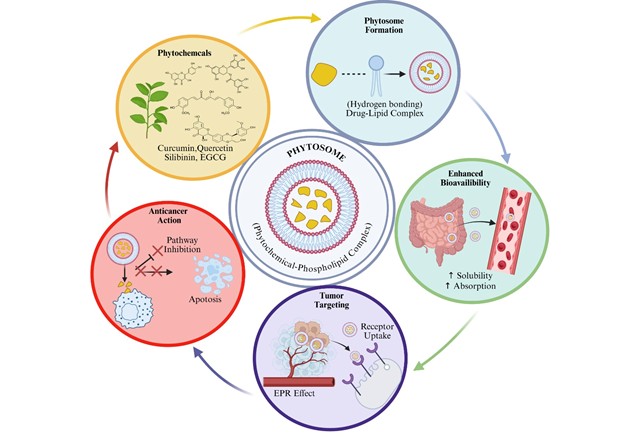
Background: Phytochemicals are medicinal plants with strong anticancer properties that alter various molecular pathways involved in tumor initiation, progression, and metastasis. Several adverse factors, however, hamper their clinical translation: low aqueous solubility, low membrane permeability, high first-pass metabolism, and rapid systemic elimination. Phytosomal drug delivery systems have emerged as a new, advanced lipid-based approach to addressing these pharmacokinetic and biopharmaceutical challenges. Methodology: Phytosomes are molecular complexes formed by a stoichiometric reaction between phytoconstituents and phospholipids, thereby increasing stability, improving bioavailability, and enhancing cellular uptake compared to conventional extracts and liposomal systems. Through meticulous analysis of articles from various publishers like PubMed, Science Direct, Elsevier, Bentham Science, Wiley, SAGE, Taylor and Francis publishers, and various indexing journals like Web of Sciences and Scopus databases, etc. Result and Discussion: This is a review of phytosomal technology in the treatment of cancers, including the principles of formulation, methods of preparation, physicochemical characterization, and the mechanisms of action of an increased anticancer effect. Conclusion: There is a critical discussion of preclinical and clinical evidence on phytosomal preparations of curcumin, silibinin, quercetin, catechins, and berberine. Further, present-day problems in translational research and regulation, as well as future opportunities, such as targeted and stimuli-responsive phytosomes, are also highlighted, indicating their potential as the next generation of phytomedicines in cancer therapy.
Downloads

References
Gaikwad SS, Morade YY, Kothule AM, Kshirsagar SJ, Laddha UD, Salunkhe KS. Overview of phytosomes in treating cancer: Advancement, challenges, and future outlook. Heliyon. 9(6), e16561 (2023) https://10.1016/j.heliyon.2023.e16561
Chettupalli AK, Marati K, Peddapalli H, Kuchukuntla M. Synthesis, physicochemical methods, and characterization of nanomaterial’s, in recent progress and development in nanostructures. IntechOpen. 37, (2025) https://10.5772/intechopen.1006607
Dave P, Jani R, Chakraborthy GS, Jani KJ, Upadhye V, Kahrizi D, Mir MA, Siddiqui S, Saeed M, Upadhyay TK. Phytosomes: A promising delivery system for anticancer agents by using phytochemicals in cancer therapy. Cellular and molecular biology. 69(14), 1-8 (2023) https://doi.org/10.14715/cmb/2023.69.14.1
Vardhan J, Yadav S, Naik Bukke SP, Chettupalli AK, Thalluri C, Koduru SK, Shanmugam ST, Kumarachari RK. A Review of Methods of Enhancing Polysaccharides for Drug Delivery Applications. Natural product communications. 20(12), 1934578X251407010 (2025), https://doi.org/10.1177/1934578X251407010
G. Mehta, R. Rani, A. P. Singh, and A. P. Singh, “Phytosomes in herbal formulation: an updated review,” Int. J. Pharm. Drug Anal., pp. 51–57, Apr. 2024, https://doi.org/10.47957/ijpda.v12i1.574
Gal AF, Rugină D, Dumitraș DA, Tabaran AF, Matei-Lațiu MC, Andrei SM. Limited chemopreventive effects of oral administration of Polyphenol-60 from green tea in the MNU-Induced rat mammary tumor model. Antioxidants. 14(8), 1009 (2025) https://doi.org/10.3390/antiox14081009
Yadav S, Bukke SP, Prajapati S, Aansari I, Tomar PS, Jai R, Vardhan J, Chettupalli AK, Thalluri C, Eftekhari Z. Advances in cancer therapy: a critical review of β-cyclodextrins conjugated nanoparticle delivery systems as molecularly targeted therapies. International journal of pharmaceutics. 682, 125937 (2025) https://doi.org/10.1016/j.ijpharm.2025.125937
Godyla-Jabłoński M, Raczkowska E. Roles of Selected Bioactive Compounds in Inhibiting the Development and Progression of Cancer—A Review. International journal of molecular sciences. 26(21), 10343 (2025) https://doi.org/10.3390/ijms262110343
Stoeva-Grigorova S, Ivanova N, Sotirova Y, Radeva-Ilieva M, Hvarchanova N, Georgiev K. Lipid-based nanotechnologies for delivery of green tea catechins: Advances, challenges, and therapeutic potential. Pharmaceutics. 17(8), 985 (2025) https://doi.org/10.3390/pharmaceutics17080985
KS S, Aditi K. Phytosome as a novel drug delivery system for bioavailability enhancement of phytoconstituents and its applications: A review. Journal of drug delivery and therapeutics. 11(3), (2021) https://doi.org/10.22270/JDDT.V11I3.4847
Mardiana L, Milanda T, Hadisaputri YE, Chaerunisaa AY. Phytosome-Enhanced Secondary Metabolites for Improved Anticancer Efficacy: Mechanisms and Bioavailability Review. Drug design, development and therapy. 19, 201-18 (2025) https://doi.org/10.2147/DDDT.S483404
AbouSamra MM. Liposomal nano-carriers mediated targeting of liver disorders: mechanisms and applications. Journal of Liposome Research. 34(4), 728-43 (2024) https://doi.org/10.1080/08982104.2024.2377085
Barani M, Sangiovanni E, Angarano M, Rajizadeh MA, Mehrabani M, Piazza S, Gangadharappa HV, Pardakhty A, Mehrbani M, Dell’Agli M, Nematollahi MH. Phytosomes as innovative delivery systems for phytochemicals: A comprehensive review of literature. International journal of nanomedicine. 16, 6983-7022 (2021) https://doi.org/10.2147/IJN.S318416
Patel G, Prajapati B, Hinglajia H. Lipid-based drug delivery system: spotlight on nanoemulsion as versatile nanocarrier. In lipid-based drug delivery systems. Jenny Stanford Publishing. (pp. 83-124) 2023. https://doi.org/10.1201/9781003459811
Jacob S, Kather FS, Boddu SH, Rao R, Nair AB. Vesicular carriers for phytochemical delivery: A comprehensive review of techniques and applications. Pharmaceutics. 17(4), 464 (2025) https://doi.org/10.3390/pharmaceutics17040464
Safta DA, Bogdan C, Moldovan ML. Vesicular nanocarriers for phytocompounds in wound care: preparation and characterization. Pharmaceutics. 14(5), 991 (2022) 10.3390/pharmaceutics14050991
Batur E, Özdemir S, Durgun ME, Özsoy Y. Vesicular drug delivery systems: promising approaches in ocular drug delivery. Pharmaceuticals. 17(4), 511 (2024), https://doi.org/10.3390/ph17040511
Chettupalli AK, Bukke SP, Vardhan J, Yadhav S, Mamilla Mugaiahgari BK, Jahnavi P, Yata VK, Narapureddy BR. Polyherbal formulations and phytosome-based delivery in diabetic wound healing: an integrative review. Journal of biomaterials science, polymer edition. 1-28 (2025) https://doi.org/10.1080/09205063.2025.2568684
Toma L, Deleanu M, Sanda GM, Barbălată T, Niculescu LŞ, Sima AV, Stancu CS. Bioactive compounds formulated in phytosomes administered as complementary therapy for metabolic disorders. International journal of molecular sciences. 25(8), 4162 (2024) https://doi.org/10.3390/ijms25084162
Rani A, Kumar S, Khar RK. Murraya koenigii extract loaded phytosomes prepared using antisolvent precipitation technique for improved antidiabetic and hypolidemic activity. Indian journal of pharmaceutical education and research. 56, s326-38 (2022) https://doi.org/10.5530/ijper.56.2s.103
Shah S, Chauhan H, Madhu H, Mori D, Soniwala M, Singh S, Prajapati B. Lipids fortified nano phytopharmaceuticals: a breakthrough approach in delivering bio-actives for improved therapeutic efficacy. Pharmaceutical nanotechnology. 13(1), 70-89 (2025) https://doi.org/10.2174/0122117385277686231127050723
Veselá K, Kejík Z, Masařík M, Babula P, Dytrych P, Martásek P, Jakubek M. Curcumin: A potential weapon in the prevention and treatment of head and neck cancer. ACS pharmacology and translational science. 7(11), 3394-418 (2024) https://doi.org/10.1021/acsptsci.4c00518
Dwivedi J, Sachan P, Wal P, Dwivedi S, Sharma MC, Rao SP. Detailed review on phytosomal formulation attenuating new pharmacological therapies. Advances in Traditional Medicine. 24(3), 659-84. (2024) https://doi.org/10.1007/s13596-023-00712-3
Almatroodi SA, Alsahli MA, Almatroudi A, Verma AK, Aloliqi A, Allemailem KS, Khan AA, Rahmani AH. Potential therapeutic targets of quercetin, a plant flavonol, and its role in the therapy of various types of cancer through the modulation of various cell signaling pathways. Molecules. 26(5), 1315 (2021) https://doi.org/10.3390/molecules26051315
Kumar R. Nanotechnology in herbal medicine: Challenges and future perspectives. In nanotechnology in herbal medicine. (pp. 515-548). Woodhead Publishing. 2023 https://doi.org/10.1016/B978-0-323-99527-6.00008-2
Tafish AM, El-Sherbiny M, Al‐Karmalawy AA, Soliman OA, Saleh NM. Carvacrol-loaded phytosomes for enhanced wound healing: molecular docking, formulation, DoE-aided optimization, and in vitro/in vivo evaluation. International journal of nanomedicine. 18, 5749-80 (2023) https://doi.org/10.2147/IJN.S421617
Patel P, Garala K, Singh S, Prajapati BG, Chittasupho C. Lipid-based nanoparticles in delivering bioactive compounds for improving therapeutic efficacy. Pharmaceuticals. 17(3), 329 (2024) https://doi.org/10.3390/ph17030329
Hessel V, Tran NN, Asrami MR, Tran QD, Long NV, Escribà-Gelonch M, Tejada JO, Linke S, Sundmacher K. Sustainability of green solvents–review and perspective. Green chemistry. 24(2), 410-37 (2022) https://doi.org/10.1039/D1GC03662A
Kardani SL. Nanocarrier-based formulations: regulatory challenges, ethical and safety considerations in pharmaceuticals. Asian Journal of Pharmaceutics. 18(02), 346-51 (2024) https://doi.org/10.22377/ajp.v18i02.5444
Nandhini S, Ilango K. Development and characterization of a nano-drug delivery system containing vasaka phospholipid complex to improve bioavailability using quality by design approach. Research in pharmaceutical sciences. 16(1), 103-17 (2021) https://doi.org/10.4103/1735-5362.305193
Dewi MK, Muhaimin M, Joni IM, Hermanto F, Chaerunisaa AY. Fabrication of phytosome with enhanced activity of Sonneratia alba: formulation modeling and in vivo antimalarial study. International journal of nanomedicine. 19, 9411-35 (2024), https://doi.org/10.2147/IJN.S467811
Sarvepalli S, Pasika SR, Verma V, Thumma A, Bolla S, Nukala PK, Butreddy A, Bolla PK. A Review on the Stability Challenges of Advanced Biologic Therapeutics. Pharmaceutics. 17(5), 550 (2025) https://doi.org/10.3390/pharmaceutics17050550
Chettupalli AK, Sisodia A, Abdul Rahaman SK, Bukke SP, Boggula N. Phytochemicals in Prevention and Management of Cardiovascular Disease. InMedicinal Plants and Their Bioactives in Human Diseases 2025 (pp. 103-125). Cham: Springer Nature Switzerland. https://doi.org/10.1007/978-3-032-01356-9_5
Barani M, Sangiovanni E, Angarano M, Rajizadeh MA, Mehrabani M, Piazza S, Gangadharappa HV, Pardakhty A, Mehrbani M, Dell’Agli M, Nematollahi MH. Phytosomes as innovative delivery systems for phytochemicals: A comprehensive review of literature. International journal of nanomedicine. 15(11), 6983-7022. (2021) https://doi.org/10.2147/IJN.S318416
Solnier J, Zhang Y, Kuo YC, Du M, Roh K, Gahler R, Wood S, Chang C. Characterization and pharmacokinetic assessment of a new berberine formulation with enhanced absorption in vitro and in human volunteers. Pharmaceutics. 15(11), 2567 (2023) https://doi.org/10.3390/pharmaceutics15112567
Chettupalli AK, Chokkarapu S, Singh A, Babu MR, Singh MP, Bukke SP. Development and fabrication of a novel nano-bilosomal system for enhanced oral delivery of Trametinib: apoptotic induction and anticancer efficacy evaluation. Materials technology. 40(1), 2495346 (2025) https://doi.org/10.1080/10667857.2025.2495346
Nguyen TT, Duong VA, Maeng HJ. Pharmaceutical formulations with P-glycoprotein inhibitory effect as promising approaches for enhancing oral drug absorption and bioavailability. Pharmaceutics. 13(7), 1103 (2021) https://doi.org/10.3390/pharmaceutics13071103
Chaudhary K, Rajora A. Phytosomes: a critical tool for delivery of herbal drugs for cancer: Phytosomes: Advancing Herbal Medicine Delivery. Phytochemistry reviews. 24(1), 165-95 (2025) https://doi.org/10.1007/s11101-024-09947-7
Pungsrinont T, Kallenbach J, Baniahmad A. Role of PI3K-AKT-mTOR pathway as a pro-survival signaling and resistance-mediating mechanism to therapy of prostate cancer. International journal of molecular sciences. 22(20), 11088 (2021) https://doi.org/10.3390/ijms222011088
Chaudhary K, Rajora A. Phytosomes: a critical tool for delivery of herbal drugs for cancer: Phytosomes: Advancing Herbal Medicine Delivery. Phytochemistry Reviews. 24(1), 165–195 (2025). https://doi.org/10.1007/s11101-024-09947-7
Akter K, Gul K, Mumtaz S. Revisiting Curcumin in cancer therapy: recent insights into molecular Mechanisms, Nanoformulations, and synergistic combinations. Current issues in molecular biology. 47(9), 716 (2025) https://doi.org/10.3390/cimb47090716
Priya S, Desai VM, Singhvi G. Surface modification of lipid-based nanocarriers: a potential approach to enhance targeted drug delivery. ACS omega. 8(1), 74-86 (2023) https://doi.org/10.1021/acsomega.2c05976
Chavda VP, Nalla LV, Balar P, Bezbaruah R, Apostolopoulos V, Singla RK, Khadela A, Vora L, Uversky VN. Advanced phytochemical-based nanocarrier systems for the treatment of breast cancer. Cancers. 15(4), 1023(2023) https://doi.org/10.3390/cancers15041023
Mane VB, Killedar SG, More HN, Tare HL. Evaluation of acute oral toxicity of the Emblica officinalis Phytosome Formulation in Wistar Rats. International journal of drug delivery technology. 12(4), 1566-70 (2022) https://doi.org/10.25258/ijddt.12.4.14
El Maaiden E, Bouzroud S, Nasser B, Moustaid K, El Mouttaqi A, Ibourki M, Boukcim H, Hirich A, Kouisni L, El Kharrassi Y. A comparative study between conventional and advanced extraction techniques: pharmaceutical and cosmetic properties of plant extracts.. Molecules. 27(7), 2074 (2022), https://doi.org/10.3390/molecules27072074
Vahedi N, Tabandeh F, Mahmoudifard M. Hyaluronic acid–graphene quantum dot nanocomposite: Potential target drug delivery and cancer cell imaging. Biotechnology and Applied Biochemistry. 69(3), 1068-79 (2022) https://doi.org/ 10.1002/bab.2151
Song B, Shuang L, Zhang S, Tong C, Chen Q, Li Y, Hao M, Niu W, Jin CH. Research progress of nano drug delivery systems in the anti-tumor treatment of traditional Chinese medicine monomers. PeerJ. 13, e19332 (2025) https://doi.org/10.7717/peerj.19332
Huang P, Li W, Guan J, Jia Y, Wang D, Chen Y, Xiao N, Ou S, Wang Y, Yang B. Synthetic vesicle-based drug delivery systems for oral disease therapy: current applications and future directions. Journal of functional biomaterials. 16(1), 25 (2025) https://doi.org/10.3390/jfb16010025
Prajapati A, Rangra S, Patil R, Desai N, Jyothi VG, Salave S, Amate P, Benival D, Kommineni N. Receptor-targeted nanomedicine for cancer therapy. Receptors. 3(3), 323-61 (2024) https://doi.org/10.3390/receptors3030016
Deng H, Wei F, Han W, Li Y, Xu X, Zhang L, Zhang Y. Synergistic chemotherapy and immunomodulatory effects of Quercetin in cancer: a review. Frontiers in immunology. 16, 1547992 (2025) https://doi.org/10.3389/fimmu.2025.1547992
Dhupal M, Chowdhury D. Phytochemical-based nanomedicine for advanced cancer theranostics: perspectives on clinical trials to clinical use. International journal of nanomedicine. 15, 9125-57 (2020) https://doi.org/0.2147/IJN.S265384.
Govindaram LK, Bratty MA, Alhazmi HA, Kandasamy R, Thangavel N, Ibrahim AM, Mariya GA, Kumar P. Formulation, biopharmaceutical evaluation and in-vitro screening of polyherbal phytosomes for breast cancer therapy. Drug Development and Industrial Pharmacy. 48(10), 552-65 (2022) https://doi.org/10.1080/03639045.2022.2113085.
Di Pierro F, Sultana R, Eusaph AZ, Abrar S, Bugti M, Afridi F, Farooq U, Iqtadar S, Ghauri F, Makhduma S, Nourin S. Effect of Berberine Phytosome on reproductive, dermatologic, and metabolic characteristics in women with polycystic ovary syndrome: a controlled, randomized, multi-centric, open-label clinical trial. Frontiers in pharmacology. 14, 1269605 (2023) https://doi.org/10.3389/fphar.2023.1269605
Waidyanatha S, Collins BJ, Cristy T, Embry M, Gafner S, Johnson H, Kellogg J, Krzykwa J, Li S, Mitchell CA, Mutlu E. Advancing botanical safety: a strategy for selecting, sourcing, and characterizing botanicals for developing toxicological tools. Food and Chemical Toxicology. 186, 114537 (2024) https://doi.org/ 10.1016/j.fct.2024.114537
Park JY, Lee D, Rui L, Gao X, Furness MS, Wu C. Analysis of Regulatory Botanical Submission Profile for Cancer Management from the US FDA Perspectives. Therapeutic innovation and regulatory science. 59, 1-9 (2025) https://doi.org/10.1007/s43441-025-00786-y
Mahmood TH, Al‐Samydai A, Sulaibi MA, Alqaraleh M, Abed AI, Shalan N, Alsanabrah A, Alsotari ST, Nsairat H, Alshaer W. Development of pegylated nano‐phytosome formulation with oleuropein and rutin to compare anti‐colonic cancer activity with Olea europaea leaves extract. Chemistry and biodiversity. 20(8), e202300534 (2023) https://doi.org/10.1002/cbdv.202300534
Swain A, Jena SR, Samanta L. Smart nanocarriers for cancer: harnessing exosomes and lipid systems in photodynamic and immunotherapy. Frontiers in immunology. 16, 1687953 (2025) https://doi.org/10.3389/fimmu.2025.1687953
Bhujel R, Enkmann V, Burgstaller H, Maharjan R. Artificial intelligence-driven strategies for targeted delivery and enhanced stability of RNA-based lipid nanoparticle cancer vaccines. Pharmaceutics. 17(8), 992 (2025) https://doi.org/10.3390/pharmaceutics17080992
Flaig TW, Gustafson DL, Su LJ, Zirrolli JA, Crighton F, Harrison GS, Pierson AS, Crawford ED, Glodé LM. A phase I and pharmacokinetic study of silibinin-phytosome in patients with advanced prostate cancer. Cancer Chemother Pharmacol, 65(6), 1111–1117 (2010) https://doi.org/10.1007/s10637-006-9019-2
Published
How to Cite
Issue
Section
Copyright (c) 2026 Sujatha Damera, Mounika Kuchukuntla, Mani Sharma, Ram Mohan Manda, Ananda Kumar Chettupalli, Rajendra Kumar Jadi

This work is licensed under a Creative Commons Attribution-NonCommercial 4.0 International License.