Development and optimization of zingerone-loaded PLGA oil-based nanocarriers for enhanced solubility and sustained drug release
DOI:
https://doi.org/10.69857/joapr.v14i3.1977Keywords:
Zingerone, PLGA nanocarrier, peanut oil, sustained release, drug delivery, solubility enhancementAbstract
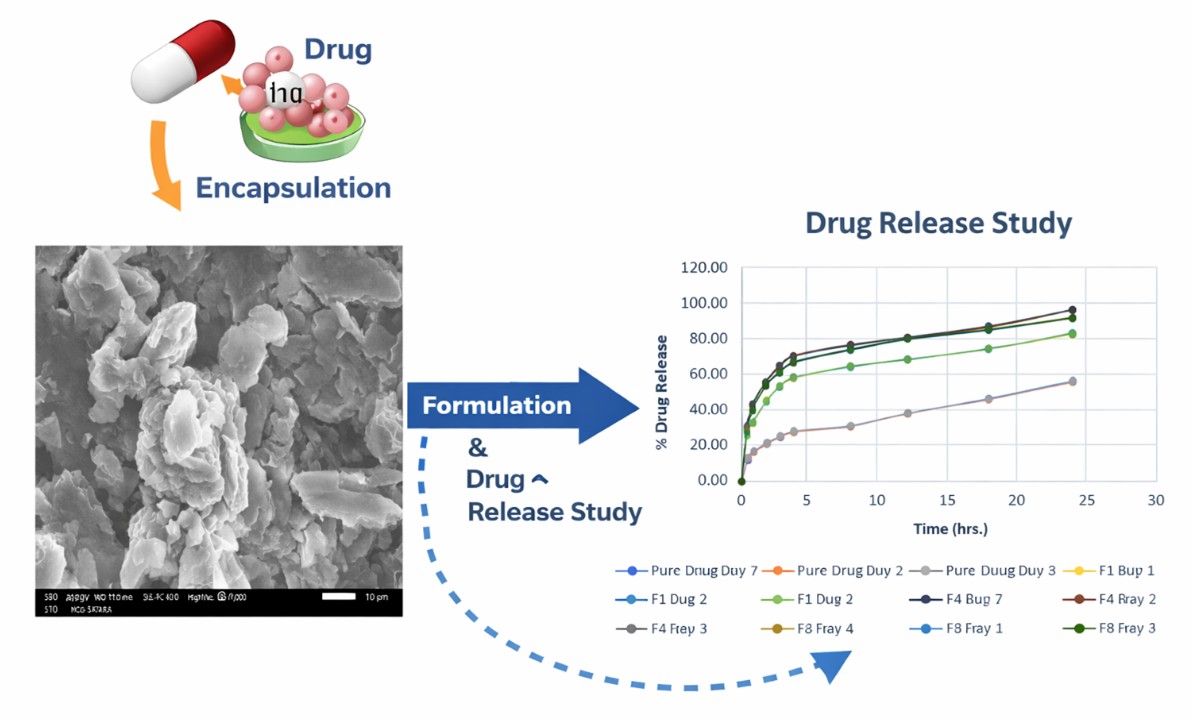
Background: Zingerone, a phenolic constituent of Zingiber officinale, possesses notable antioxidant, anti-inflammatory, and anticancer activities. Its therapeutic use is limited by poor water solubility and low oral bioavailability, resulting in suboptimal efficacy. Polymeric nanocarriers, especially poly(lactic-co-glycolic acid) (PLGA)-based systems, offer an effective approach to enhance solubility, stability, and controlled drug delivery. Integration of lipid components into PLGA matrices can further improve drug loading and solubilization. This study focused on the design and optimization of zingerone-loaded PLGA oil-based nanocarriers to improve solubility and sustained release. Methodology: Solubility screening of zingerone in different oils identified peanut oil as the most suitable vehicle (54.31 mg/ml). Nanocarriers were prepared using a solvent evaporation method, producing nine formulations (F1–F9) with varying oil content and homogenization speeds. Characterization included particle size and zeta potential analysis, FTIR, DSC, SEM, and drug content determination using UV spectroscopy and HPLC. Drug release was studied using a dialysis membrane in phosphate buffer (pH 6.4), and stability testing was performed for the optimized formulation. Results and Discussion: The optimized batch (F4) exhibited a particle size of 79.7 nm, a zeta potential of −27.3 mV, and a drug content of 99.73%. Solubility increased more than 30-fold (5.44 mg/ml), with sustained drug release reaching 97.7% over 24 hours. Characterization confirmed efficient encapsulation and formulation stability. Conclusion: PLGA oil-based nanocarriers significantly improved zingerone solubility and enabled controlled release, indicating strong potential for further pharmacokinetic and therapeutic evaluation.
Downloads

References
Das S, Chaudhury A. Recent advances in lipid nanoparticle formulations with solid matrix for oral drug delivery. AAPS PharmSciTech, 12, 62–76 (2011) https://doi.org/10.1208/s12249-010-9563-0
Nunse D, Shevalkar GB, Borse L. Innovative polymeric micelles with in-situ gelation for enhanced ocular delivery of ketoconazole. J Pharm Innov, 20, 1–12 (2025) https://doi.org/10.1007/s12247-024-09915-w
Danhier F, Ansorena E, Silva JM, et al. PLGA-based nanoparticles: an overview of biomedical applications. J Control Release, 161(2), 505–522 (2012) https://doi.org/10.1016/j.jconrel.2012.01.043
Meng F, Cheng R, Deng C, Zhong Z. Intracellular drug release nanosystems. Mater Today, 15(10), 436–442 (2012) https://doi.org/10.1016/S1369-7021(12)70203-9
Sarkar S, Mazumder S, Saha SJ, Bandyopadhyay U. Management of inflammation by natural polyphenols. Curr Med Chem, 23(16), 1657–1695 (2016) https://doi.org/10.2174/0929867323666160418115540
Patel M, Shah T, Amin A. Lipid-based nanocarriers for bioavailability enhancement of hydrophobic drugs. AAPS PharmSciTech, 19(4), 1660–1672 (2018) https://doi.org/10.1208/s12249-018-0973-x
Kothawade SN, Pande VV. Formulation and evaluation of amisulpride loaded intranasal microemulsion. Indian Drugs, 60(9), 1–22 (2023) https://doi.org/10.53879/id.60.09.13783
Pande V, Kothawade S, Kuskar S, et al. Fabrication of mesoporous silica nanoparticles and applications in drug delivery. In: Nanofabrication Techniques. IntechOpen (2023) https://doi.org/10.5772/intechopen.112428
Lunkad AS, Agrawal MR, Kothawade SN. Anthelmintic activity of Bryophyllum pinnatum. Res J Pharmacogn Phytochem, 8(1), 21 (2016) https://doi.org/10.5958/0975-4385.2016.00005.4
Kumari A, Yadav SK, Yadav SC. Biodegradable polymeric nanoparticles for drug delivery. Colloids Surf B Biointerfaces, 75(1), 1–18 (2010) https://doi.org/10.1016/j.colsurfb.2009.09.001
Kothawade SN, Chaudhari PD. Biodegradable porous starch foam for oral delivery of eprosartan mesylate. J Adv Sci Res, 12(03), 120–126 (2021) https://doi.org/10.55218/JASR.s1202112314
Jain RA. Manufacturing techniques of PLGA drug delivery systems. Biomaterials, 21(23), 2475–2490 (2000) https://doi.org/10.1016/S0142-9612(00)00115-0
Zhang Y, Chan HF, Leong KW. Advanced nanoparticle delivery systems for natural therapeutics. Adv Drug Deliv Rev, 65(4), 104–120 (2013) https://doi.org/10.1016/j.addr.2012.07.010
Kothawade SN, Avhad SR, Rngade RB, et al. Aloe vera powder as bioenhancer: a review. Int J Pharm Phytopharmacol Res, 13(2), 37–44 (2023) https://doi.org/10.51847/ZFFtdBFaPt
Muller RH, Radtke M, Wissing SA. Nanostructured lipid carriers for improved drug solubility. Adv Drug Deliv Rev, 54, 131–155 (2002) https://doi.org/10.1016/S0169-409X(02)00118-7
Hemnani N, Suresh PK. NLC system for ocular drug delivery. J Appl Pharm Res, 13, 141–153 (2025) https://doi.org/10.69857/joapr.v13i3.1162
Yin J, Hou Y, Song X, et al. Polymer-lipid hybrid nanoparticles for oral delivery of quercetin. Int J Nanomedicine, 14, 4045–4057 (2019) https://doi.org/10.2147/IJN.S210057
Pawar MA, Shevalkar GB, Vavia PR. Gastro-retentive delivery system for trazodone. AAPS PharmSciTech, 23, 251 (2022) https://doi.org/10.1208/s12249-022-02404-8
Shevalkar G, Pawar M, Vavia P. NLCs of lumefantrine with enhanced permeation. J Pharm Innov, 17, 1221–1234 (2022) https://doi.org/10.1007/s12247-021-09590-1
Thete R, Shevalkar G, Borse L. NLCs for donepezil nose-to-brain delivery. Biosci Biotechnol Res Asia, 21, 1145–1156 (2024) https://doi.org/10.13005/bbra/3293
Darandale SS, Shevalkar GB, Vavia PR. Lipid composition in propofol formulations. AAPS PharmSciTech, 18, 441–450 (2017) https://doi.org/10.1208/s12249-016-0524-0
Zhao Z, Ukidve A, Kim J, Mitragotri S. Targeting strategies for drug delivery. Cell, 181(1), 151–167 (2019) https://doi.org/10.1016/j.cell.2019.09.017
Jojo GM, Kuppusamy G, De A, et al. Intranasal nanolipid carriers of pioglitazone. Drug Dev Ind Pharm, 45, 1061–1072 (2019) https://doi.org/10.1080/03639045.2019.1593439
Pawar SK, Vavia PR. Rice germ oil in SMEDDS of tacrolimus. AAPS PharmSciTech, 13, 254–261 (2012) https://doi.org/10.1208/s12249-011-9748-1
Elmowafy M, Al-Sanea MM. NLCs as drug delivery platform. Saudi Pharm J, 29, 999–1012 (2021) https://doi.org/10.1016/j.jsps.2021.07.015
Tamjidi F, Shahedi M, Varshosaz J, et al. NLCs for food bioactives. Innov Food Sci Emerg Technol, 19, 29–43 (2013) https://doi.org/10.1016/j.ifset.2013.03.002
Leng D, Thanki K, Fattal E, et al. Lipid-polymer hybrid nanoparticles engineering. Int J Pharm, 548, 740–746 (2018) https://doi.org/10.1016/j.ijpharm.2017.08.094
Amasya G, Şengel Türk CT, Badilli U, et al. Optimization of SLNs of fluticasone propionate. Turk J Pharm Sci, 17, 359–366 (2020) https://doi.org/10.4274/tjps.galenos.2019.27136
Syed YY. Fluticasone furoate/vilanterol in asthma. Drugs, 75, 407–418 (2015) https://doi.org/10.1007/s40265-015-0354-5
Yadav S, Jain V, Magar H, et al. RP-HPLC method for inhalation formulation. J Chromatogr Sci, 62, 761–766 (2024) https://doi.org/10.1093/chromsci/bmad075
Johnson M. Development of fluticasone propionate. J Allergy Clin Immunol, 101, S434–S439 (1998) https://doi.org/10.1016/S0091-6749(98)70155-1
Giavina-Bianchi P. Fluticasone furoate nasal spray. Ther Clin Risk Manag, 4, 465–472 (2008) https://doi.org/10.2147/TCRM.S1984
Elsisi R, Helal D, Mekhail G, et al. Nanoparticles in skin aging treatment. Arch Pharm Sci Ain Shams Univ, 7, 376–401 (2023) https://doi.org/10.21608/aps.2023.250333.1146
Tavares Luiz M, Santos Rosa Viegas J, Palma Abriata J, et al. DoE in nanoparticle optimization. Eur J Pharm Biopharm, 165, 127–148 (2021) https://doi.org/10.1016/j.ejpb.2021.05.011
Tang C, Niu X, Shi L, et al. Pharmacokinetic drug-drug interaction study. Front Pharmacol, 11 (2021) https://doi.org/10.3389/fphar.2020.626897
Published
How to Cite
Issue
Section
Copyright (c) 2026 Varsha Laxman Jakune, Varsha Siddheswar Tegeli

This work is licensed under a Creative Commons Attribution-NonCommercial 4.0 International License.