Salicin in modern drug discovery: A comprehensive review of pharmacokinetics, ethnopharmacology, and clinical applications
DOI:
https://doi.org/10.69857/joapr.v14i1.1771Keywords:
Salicin, Salix species, phenolic glycoside, ethnopharmacology, bioavailability, analytical profilingAbstract
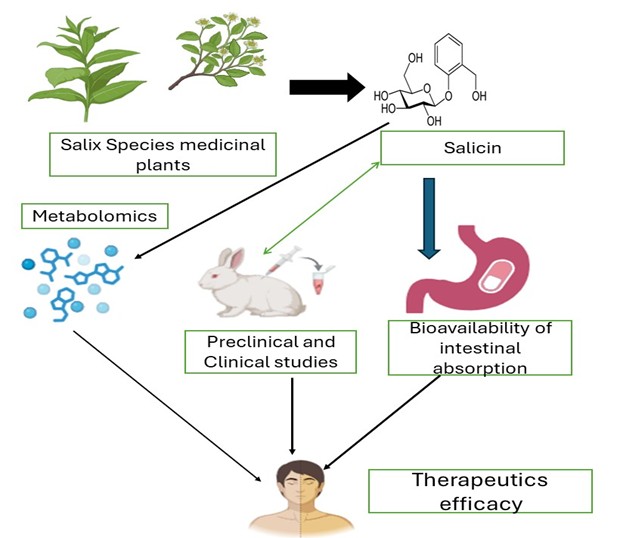
Background: Salicin, a prominent phenolic glycoside derived from Salix species, has traditionally been used to manage pain and inflammatory conditions. Despite its long-standing ethnomedicinal use, comprehensive knowledge regarding its pharmacokinetics, bioavailability, analytical characterization, and clinical potential remains limited. This review aims to consolidate current knowledge on salicin, encompassing its botanical sources, ethnopharmacological relevance, pharmacokinetics and bioavailability, analytical methodologies, and clinical evidence. Methods: A thorough literature search was performed using PubMed, Scopus, Web of Science, and Google Scholar. Studies reporting on salicin’s chemistry, traditional uses, pharmacological mechanisms, bioavailability, analytical profiling, and clinical trials were included. Relevant data were critically appraised and synthesized to provide an integrated overview. Results and Findings: Salix species are the primary sources of salicin, and ethnomedicinal evidence supports their use for musculoskeletal and inflammatory disorders. Pharmacokinetic studies indicate that formulation and gut microbiota significantly influence bioavailability, with rapid hydrolysis to saligenin followed by metabolism to salicylic acid. Advances in analytical methods, including spectroscopic techniques, LC-MS, and HPLC, enable precise quantification and standardization. Although large-scale, long-term trials are lacking, existing clinical studies demonstrate notable anti-inflammatory and analgesic effects with a favourable safety profile. Conclusion: Salicin holds considerable therapeutic promise, bridging traditional knowledge and modern pharmacology. Future studies should improve bioavailability, standardize analyses, and conduct robust clinical trials to confirm dosing, efficacy, and safety.
Downloads

References
Huang J, Zhao D, Cui C, Hao J, Zhang Z, Guo L. Research progress and trends of phenylethanoid glycoside delivery systems. Foods, 11(5), (2022) https://doi.org/10.3390/foods11050769
Liu CF. Recent advances on natural aryl-c-glycoside scaffolds: structure, bioactivities, and synthesis—a comprehensive review. Molecules, 27(21), (2022) https://doi.org/10.3390/molecules27217439
Lin CR, Tsai SH, Wang C, Lee CL, Hung SW, Ting YT, et al. Willow bark (Salix spp.) used for pain relief in arthritis: a meta-analysis of randomized controlled trials. Life, 13(10), (2023) https://doi.org/10.3390/life13102058
Zombori Z, Szalai G, Hamow KA, Hóvári M, Sass L, et al. Bioactive compounds in extracts from short rotation willow shoots known as pharmaceuticals and experimental demonstration of biostimulation of maize plants by these chemical complexes. Front Plant Sci, 16, (2025) https://doi.org/10.3389/fpls.2025.1650824
Patrono C. Fifty years with aspirin and platelets. Br J Pharmacol, 180(1), (2023) https://doi.org/10.1111/bph.15966
Elwood P, Protty M, Morgan G, Pickering J, Delon C, Watkins J. Aspirin and cancer: biological mechanisms and clinical outcomes. Open Biol, 12(9), (2022) https://doi.org/10.1098/rsob.220124
Geszke-Moritz M, Nowak G, Moritz M, Feist B, Nycz JE. Role of plant materials with anti-inflammatory effects in phytotherapy of osteoarthritis. Curr Top Med Chem, 25(1), (2025) https://doi.org/10.2174/0115680266297662240527105450
Yeoh SC, Goh CF. Topical delivery of salicylates. Drug Deliv Transl Res, 12(5), (2022) https://doi.org/10.1007/s13346-021-00988-5
Choi D, Al Baki MA, Ahmed S, Kim Y. Aspirin inhibition of prostaglandin synthesis impairs mosquito egg development. Cells, 11(24), (2022) https://doi.org/10.3390/cells11244092
Johnson JB, Mani JS, Broszczak D, Prasad SS, Ekanayake CP, Strappe P. Hitting the sweet spot: a systematic review of the bioactivity and health benefits of phenolic glycosides from medicinally used plants. Phytother Res, 35(7), (2021) https://doi.org/10.1002/ptr.7042
Liu CX. Overview on development of ASEAN traditional and herbal medicines. Chin Herb Med, 13(4), (2021) https://doi.org/10.1016/j.chmed.2021.09.002
Santos-Gallego CG, Badimon J. Overview of aspirin and platelet biology. Am J Cardiol, 144, (2021) S2-S9 https://doi.org/10.1016/j.amjcard.2020.12.018
Pirintsos S, Panagiotopoulos A, Bariotakis M, Daskalakis V, Lionis C, Sourvinos G. From traditional ethnopharmacology to modern natural drug discovery: a methodology discussion and specific examples. Molecules, 27(13), (2022) https://doi.org/10.3390/molecules27134060
Shrivastava R, Modi G, Satpathy PS, Bandyopadhyay S, Kumar Y, Yadav I. Natural products revolutionizing and innovative drug discovery and development strategies: healthcare challenges and future perspectives. J Appl Bioanal, 10(1), (2024) 20-38 https://doi.org/10.53555/jab.v10.002
Wautier JL, Wautier MP. Pro- and anti-inflammatory prostaglandins and cytokines in humans: a mini review. Int J Mol Sci, 24(11), (2023) 9647 https://doi.org/10.3390/ijms24119647
Jamtsho T, Yeshi K, Perry MJ, Loukas A, Wangchuk P. Approaches, strategies and procedures for identifying anti-inflammatory drug lead molecules from natural products. Pharmaceuticals, 17(3), (2024) 283 https://doi.org/10.3390/ph17030283
Marinček P, Léveillé-Bourret É, Heiduk F, Leong J, Bailleul SM, Volf M, et al. Challenge accepted: evolutionary lineages versus taxonomic classification of North American shrub willows (Salix). Am J Bot, 111(7), (2024) e16361 https://doi.org/10.1002/ajb2.16361
Ahmed SS, Rahman MO, Ali MA, Al Hemaid F, Lee J. Molecular phylogenetics and molecular dating of Arecaceae in Bangladesh inferred from matK and rbcL genes. Bangladesh J Plant Taxon, 30(2), (2023) 213-232 https://doi.org/10.3329/bjpt.v30i2.70498
Ogutcen E, de Lima Ferreira P, Wagner ND, Marinček P, Leong JV, Aubona G, et al. Phylogenetic insights into the Salicaceae: the evolution of willows and beyond. Mol Phylogenet Evol, 199, (2024) 108161 https://doi.org/10.1016/j.ympev.2024.108161
Marchenko AM, Kuzovkina YA. Notes on the nomenclature and taxonomy of Salix fragilis (Salicaceae). Taxon, 71(4), (2022) 721-732 https://doi.org/10.1002/tax.12685
Wagner ND, He L, Hörandl E. The evolutionary history, diversity, and ecology of willows (Salix L.) in the European Alps. Diversity, 13(4), (2021) 146 https://doi.org/10.3390/d13040146
Zhang XJ, Liu KJ, Wang YC, He J, Wu YM, Zhang ZX. Complete chloroplast genomes of three Salix species: genome structures and phylogenetic analysis. Forests, 12(12), (2021) 1681 https://doi.org/10.3390/f12121681
Achim F, Dinca L, Chira D, Raducu R, Chirca A, Murariu G. Sustainable management of willow forest landscapes: a review of ecosystem functions and conservation strategies. Land, 14(8), (2025) 1593 https://doi.org/10.3390/land14081593
He L, Wagner ND, Hörandl E. Restriction-site associated DNA sequencing data reveal a radiation of willow species (Salix L., Salicaceae) in the Hengduan Mountains and adjacent areas. J Syst Evol, 59(1), (2021) 44-57 https://doi.org/10.1111/jse.12593
Marchenko AM, Kuzovkina YA. Notes on the taxonomy of Salix vitellina (Salicaceae). Plants, 12(14), (2023) 2610 https://doi.org/10.3390/plants12142610
Körner C. Concepts in alpine plant ecology. Plants, 12(14), (2023) 2666 https://doi.org/10.3390/plants12142666
Singh BK, Delgado-Baquerizo M, Egidi E, Guirado E, Leach JE, Liu H, et al. Climate change impacts on plant pathogens, food security and paths forward. Nat Rev Microbiol, 21(10), (2023) 640-656 https://doi.org/10.1038/s41579-023-00900-7
Apuli RP, Richards T, Rendón-Anaya M, Karacic A, Rönnberg-Wästljung AC, Ingvarsson PK. The genetic basis of adaptation in phenology in an introduced population of Black Cottonwood (Populus trichocarpa, Torr. & Gray). BMC Plant Biol, 21(1), (2021) 317 https://doi.org/10.1186/s12870-021-03103-5
de Mestier A, Brokamp G, Celis M, Falcón-Hidalgo B, Gutiérrez J, Borsch T. Character evolution and biogeography of Casearia (Salicaceae): evidence for the South American origin of a pantropical genus and for multiple migrations to the Caribbean islands. Taxon, 71(2), (2022) 321-347 https://doi.org/10.1002/tax.12656
Walczak N, Walczak Z. Analysis of the changes in the mechanical properties of branches of Salix energy plants after shearing. Forests, 16(2), (2025) 206 https://doi.org/10.3390/f16020206
Saracila M, Panaite TD, Predescu NC, Untea AE, Vlaicu PA. Effect of dietary salicin standardized extract from Salix alba bark on oxidative stress biomarkers and intestinal microflora of broiler chickens exposed to heat stress. Agriculture, 13(3), (2023) 698 https://doi.org/10.3390/agriculture13030698
Zheng L, Jacquier JC, Harbourne N. Preparation of polyphenol-rich herbal beverages from white willow (Salix alba) bark with potential Alzheimer's disease inhibitory activity in silico. Beverages, 10(3), (2024) 75 https://doi.org/10.3390/beverages10030075
Tienaho J, Reshamwala D, Sarjala T, Kilpeläinen P, Liimatainen J, Dou J, et al. Salix spp. bark hot water extracts show antiviral, antibacterial, and antioxidant activities—the bioactive properties of 16 clones. Front Bioeng Biotechnol, 9, (2021) 797939 https://doi.org/10.3389/fbioe.2021.797939
Aleman RS, Marcia J, Duque-Soto C, Lozano-Sánchez J, Montero-Fernández I, Ruano JA, et al. Effect of microwave and ultrasound-assisted extraction on the phytochemical and in vitro biological properties of willow (Salix alba) bark aqueous and ethanolic extracts. Plants, 12(13), (2023) 2533 https://doi.org/10.3390/plants12132533
Antoniadou K, Herz C, Le NP, Mittermeier-Kleßinger VK, Förster N, Zander M, et al. Identification of salicylates in willow bark (Salix cortex) for targeting peripheral inflammation. Int J Mol Sci, 22(20), (2021) 11138 https://doi.org/10.3390/ijms222011138
Chavan SB, Dhillon RS, Sirohi C, Keerthika A, Kumari S, Bharadwaj KK, et al. Enhancing farm income through boundary plantation of poplar (Populus deltoides): an economic analysis. Sustainability, 14(14), (2022) 8663 https://doi.org/10.3390/su14148663
Ma X, Pang Z, Wu J, Zhang G, Dai Y, Zou J, et al. Seasonal pattern of stem radial growth of Salix matsudana and its response to climatic and soil factors in a semi-arid area of North China. Global Ecol Conserv, 28, (2021) e01701 https://doi.org/10.1016/j.gecco.2021.e01701
Reshi ZA, Husain FM, Khanam MN, Javed SB. Effect of meta-Topolin on morphological, physiochemical, and molecular dynamics during in vitro regeneration of Salix tetrasperma Roxb. BMC Plant Biol, 25(1), (2025) 121 https://doi.org/10.1186/s12870-025-06095-8
Krutovsky KV, Popova AA, Yakovlev IA, Yanbaev YA, Matveev SM. Response of Pedunculate Oak (Quercus robur L.) to Adverse Environmental Conditions in Genetic and Dendrochronological Studies. Plants, 14(1), (2025) 109 https://doi.org/10.3390/plants14010109
Bytner O, Drożdżek M, Laskowska A, Zawadzki J. Temperature, time, and interactions between them in relation to colour parameters of black poplar (Populus nigra L.) thermally modified in nitrogen atmosphere. Materials, 15(3), (2022) 824 https://doi.org/10.3390/ma15030824
Zhang Y, Luo P, Xu J, Hou J, Zhai L. Intra-annual growth and its response to climatic factors of two Salix species under warm temperate environment. Forests, 13(9), (2022) 1441 https://doi.org/10.3390/f13091441
Salgado M, Gallo LA, Torres CD, Stecconi M, Puntieri JG. Variations in growth and architecture in the range limit of Salix humboldtiana, the willow native to South America. Botany, 99(11), (2021) 713-723 https://doi.org/10.1139/cjb-2021-0017
Dou J, Heinonen J, Vuorinen T, Xu C, Sainio T. Chromatographic recovery and purification of natural phytochemicals from underappreciated willow bark water extracts. Sep Purif Technol, 261, (2021) 118247 https://doi.org/10.1016/j.seppur.2020.118247
Baker PW, Pisano I, Nozari-Asbemarz M, Johnston C, Lindegaard K, Prendergast J, et al. Comparison of salicin and fibre contents in the barks and woody cores of willow (Salix spp.) clones as potential feedstocks for an integrated biorefinery. Ind Crops Prod, 225, (2025) 120519 https://doi.org/10.1016/j.indcrop.2025.120519
Chew YL, Khor MA, Lim YY. Choices of chromatographic methods as stability indicating assays for pharmaceutical products: a review. Heliyon, 7(3), (2021) https://doi.org/10.1016/j.heliyon.2021.e06553
Patel HB, Dave RH, Vadariya S, Hirpara H. Development and validation for the quantification of genotoxic impurity in Mirabegron drug substance by LCMS. Biomed Chromatogr, 39(8), (2025) e70150 https://doi.org/10.1002/bmc.70150
Kulkarni RN, Pandhare RB, Deshmukh VK, Mohite PB, Pawar AR. High-performance thin layer chromatography: a powerful analytical technique in pharmaceutical drug discovery. J Pharm Biol Sci, 9(1), (2021) 7 https://doi.org/10.18231/j.jpbs.2021.002
Tawfeek N, Mahmoud MF, Hamdan DI, Sobeh M, Farrag N, Wink M, et al. Phytochemistry, pharmacology and medicinal uses of plants of the genus Salix: an updated review. Front Pharmacol, 12, (2021) 593856 https://doi.org/10.3389/fphar.2021.593856
Dou J, Ilina P, Hemming J, Malinen K, MäkkyLä H, Oliveira de Farias N, et al. Effect of hybrid type and harvesting season on phytochemistry and antibacterial activity of extracted metabolites from Salix bark. J Agric Food Chem, 70(9), (2022) 2948-2956 https://doi.org/10.1021/acs.jafc.1c08161
Mazurek S, Włodarczyk M, Pielorz S, Okińczyc P, Kuś PM, Długosz G, et al. Quantification of salicylates and flavonoids in poplar bark and leaves based on IR, NIR, and Raman spectra. Molecules, 27(12), (2022) 3954 https://doi.org/10.3390/molecules27123954
Farkas A. Salicin content from Salix alba L. and Salix purpurea L. extracts and its antibacterial effects. Contrib Bot, (2022) https://doi.org/10.24193/Contrib.Bot.57.10
Gligorić E, Igić R, Teofilović B, Grujić-Letić N. Phytochemical screening of ultrasonic extracts of Salix species and molecular docking study of Salix-derived bioactive compounds targeting pro-inflammatory cytokines. Int J Mol Sci, 24(14), (2023) 11848 https://doi.org/10.3390/ijms241411848
Wiczkowski W, Marasek-Ciołakowska A, Szawara-Nowak D, Kaszubski W, Góraj-Koniarska J, Mitrus J, et al. Effect of fluridone on roots and leaf buds development in stem cuttings of Salix babylonica (L.) 'Tortuosa' and related metabolic and physiological traits. Molecules, 29, (2024) 5410 https://doi.org/10.3390/molecules29225410
Curtasu MV, Nørskov NP. Quantitative distribution of flavan-3-ols, procyanidins, flavonols, flavanone and salicylic acid in five varieties of organic winter dormant Salix spp. by LC-MS/MS. Heliyon, 10(3), (2024) https://doi.org/10.1016/j.heliyon.2024.e25129
Rezabakhsh A, Mahmoodpoor A, Soleimanpour H. Historical perspective of aspirin: a journey from discovery to clinical practice ancient and modern history. J Cardiovasc Thorac Res, 13(2), (2021) 179 https://doi.org/10.34172/jcvtr.2021.28
Gligorić E, Igić R, Čonić BS, Kladar N, Teofilović B, Grujić N. Chemical profiling and biological activities of "green" extracts of willow species (Salix L., Salicaceae): experimental and chemometric approaches. Sustain Chem Pharm, 32, (2023) 100981 https://doi.org/10.1016/j.scp.2023.100981
Shah N, Sapra R, Kumari M, Sadhu P, Talele C. Herbal remedies for pain: a focus on plant-based solutions. Pharmacognosy Res, 17(4), (2025) https://doi.org/10.5530/pres.20252325
Li W. Cleaning and healing: an examination of the ritual of willow twigs and clean water. Religions, 16(4), (2025) 432 https://doi.org/10.3390/rel16040432
Noleto-Dias C, Lomax C, Bellisai A, Ruvo G, Harflett C, Macalpine WJ, et al. Breeding novel chemistry in willow: new hetero Diels–Alder cyclodimers from arbusculoidin and salicortin suggest parallel biosynthetic pathways. Plants, 13(12), (2024) 1609 https://doi.org/10.3390/plants13121609
Utari F, Itam A, Efdi M. Chemical constituents and antioxidant activity of Salix tetrasperma Roxb. Rasayan J Chem, 13(2), (2020) https://doi.org/10.31788/RJC.2020.1325547
Salih E, Mgbeahuruike EE, Prévost-Monteiro S, Sipari N, Väre H, Novak B, et al. Polyphenols and phenolic glucosides in antibacterial twig extracts of naturally occurring Salix myrsinifolia (Salisb.), S. phylicifolia (L.) and S. starkeana (Willd.) and the cultivated hybrid S. x pendulina (Wender.). Pharmaceutics, 16(7), (2024) 916 https://doi.org/10.3390/pharmaceutics16070916
Lee J, Song Y, Son H, Kim S, Lee KH, Bazarragchaa B, et al. Phytochemical and antioxidant characterization of extracts from unexplored medicinal plants Salix schwerinii and Salix kochiana. Horticulturae, 9(9), (2023) 955 https://doi.org/10.3390/horticulturae9090955
Basu P, Basu A. In vitro and in vivo effects of flavonoids on peripheral neuropathic pain. Molecules, 25(5), (2020) 1171 https://doi.org/10.3390/molecules25051171
Antoniadou K, Herz C, Le NPK, Mittermeier-Kleßinger VK, Förster N, Zander M, et al. Identification of salicylates in willow bark (Salix cortex) for targeting peripheral inflammation. Int J Mol Sci, 22(20), (2021) 11138 https://doi.org/10.3390/ijms222011138
Zayed A, Salem MA, Negm WA, Ezzat SM. Validation of anti-pyretic-derived natural products and their potentials for drug discovery. Rev Bras Farmacogn, 33(4), (2023) 696-712 https://doi.org/10.1007/s43450-023-00403-9
Hamed AR, Nabih HK, El-Rashedy AA, Mohamed TA, Mostafa OE, K Ali S, et al. Salvimulticanol from Salvia multicaulis suppresses LPS-induced inflammation in RAW264.7 macrophages: in vitro and in silico studies. Biotech, 14(5), (2024) 144 https://doi.org/10.1007/s13205-024-03987-8
Xiao Y, Xian Y, Hu X, Qi Z. D(-)-salicin inhibits RANKL-induced osteoclast differentiation and function in vitro. Fitoterapia, 157, (2022) 104981 https://doi.org/10.1016/j.fitote.2021.104981
Atia A, Atmani-Kilani D, Atmani D, Ayouni K, Belkhir S, Benloukil M, et al. Wound healing potential of a formula based on Populus nigra L. flower buds extract with anti-inflammatory activity. J Ethnopharmacol, 331, (2024) 118319 https://doi.org/10.1016/j.jep.2024.118319
Kapadia P, Newell AS, Cunningham J, Roberts MR, Hardy JG. Extraction of high-value chemicals from plants for technical and medical applications. Int J Mol Sci, 23(18), (2022) 10334 https://doi.org/10.3390/ijms231810334
Michel P, Olszewska MA. Phytochemistry and biological profile of Gaultheria procumbens L. and wintergreen essential oil: from traditional application to molecular mechanisms and therapeutic targets. Int J Mol Sci, 25(1), (2024) 565 https://doi.org/10.3390/ijms25010565
Pillai RR, Sreelekshmi PB, Meera AP, Thomas S. Eco-friendly fabrication of nanocurcumin/nano iron oxide composite: enhanced in vitro anticancer activity against DLD-1 cell lines. J Inorg Organomet Polym Mater, 33(12), (2023) 3805-3814 https://doi.org/10.1007/s10904-023-02735-4
Shi J, Shen L, Xiao Y, Wan C, Wang B, Zhou P, et al. Sub-inhibitory concentrations of tigecycline could attenuate the virulence of Staphylococcus aureus by inhibiting the product of α-toxin. Microbiol Spectr, 13(5), (2025) e01344-24 https://doi.org/10.1128/spectrum.01344-24
Pal RS, Pal Y, Lalitha Chaitanya MVN, Mazumder A, Khurana N, Tharu PK. Discerning the multi-dimensional role of salicin: bioactive glycoside beyond analgesic: different perspectives. Curr Drug Ther, 19(7), (2024) 757-764 https://doi.org/10.2174/0115748855272391231114042540
Sidlak AM, Spadaro A, Koyfman A, Long B, Sidlak A. Acute salicylate toxicity: a narrative review for emergency clinicians. Cureus, 17(9), (2025) https://doi.org/10.7759/cureus.91505
Michel P. Gaultherin, a natural alternative to aspirin: a comprehensive review of molecular mechanisms, pharmacokinetics, biocompatibility, isolation techniques, and plant sources. Int J Mol Sci, 26(15), (2025) 7280 https://doi.org/10.3390/ijms26157280
Tosi N, Bresciani L, Favari C, Rosi A, Dodi R, Bertelé A, et al. How does the flavan-3-ol structure condition the quali-quantitative production of phenolic metabolites? Insights from a 3-arm intervention. Food Chem, 491, (2025) https://doi.org/10.1016/j.foodchem.2025.145207
Andrei M, Ene N, Pintilie L, Radu N, Tomescu AJ, Raiciu AD. Multiple natural approaches of Salix alba. Arch Microbiol Immunol, 8(3), (2024) 410-427 https://doi.org/10.26502/ami.936500188
Saracila M, Panaite TD, Papuc CP, Criste RD. Heat stress in broiler chickens and the effect of dietary polyphenols, with special reference to Willow (Salix spp.) bark supplements—a review. Antioxidants, 10(5), (2021) 686 https://doi.org/10.3390/antiox10050686
Thongprayoon C, Petnak T, Kaewput W, Mao MA, Kovvuru K, Kanduri SR, et al. Hospitalizations for acute salicylate intoxication in the United States. J Clin Med, 9(8), (2020) 2638 https://doi.org/10.3390/jcm9082638
Visagie JL, Aruwajoye GS, van der Sluis R. Pharmacokinetics of aspirin: evaluating shortcomings in the literature. Expert Opin Drug Metab Toxicol, 20(8), (2024) 727-740 https://doi.org/10.1080/17425255.2024.2386368
González-Alamilla EN, Gonzalez-Cortazar M, Valladares-Carranza B, Rivas-Jacobo MA, Herrera-Corredor CA, Ojeda-Ramírez D, et al. Chemical constituents of Salix babylonica L. and their antibacterial activity against gram-positive and gram-negative animal bacteria. Molecules, 24(16), (2019) 2992 https://doi.org/10.3390/molecules24162992
De Souza DP, Eisenbies MH, Volk TA. Growing season harvests of shrub willow (Salix spp.) have higher nutrient removals and lower yields compared to dormant-season harvests. Forests, 13(11), (2022) 1936 https://doi.org/10.3390/f13111936
Fares S, Omar M, Laurence A, Abu-Baker S, Shaza A, Fadi H, et al. Over-the-counter anti-inflammatory supplements for adjunctive rheumatoid arthritis therapy: a comprehensive narrative review. Aging Dis, 16(1), (2024) 408 http://dx.doi.org/10.14336/AD.2024.0131
Houben K, Delahaut P, Scippo ML, Daeseleire E, Croubels S, Urbain B, et al. Salicylic acid residues in products of animal origin. (2024) https://doi.org/10.2903/fr.efsa.2024.FR-0015
Zheng Y, Chen J, Wu X, Zhang X, Hu C, Kang Y, et al. Enhanced anti-inflammatory effects of silibinin and capsaicin combination in lipopolysaccharide-induced RAW264.7 cells by inhibiting NF-κB and MAPK activation. Front Chem, 10, (2022) 934541 https://doi.org/10.3389/fchem.2022.934541
Park JH, Lee TK, Kim DW, Sim H, Lee JC, Kim JD, et al. Neuroprotective effects of salicin in a gerbil model of transient forebrain ischemia by attenuating oxidative stress and activating PI3K/Akt/GSK3β pathway. Antioxidants, 10(4), (2021) 629 https://doi.org/10.3390/antiox10040629
Piątczak E, Dybowska M, Płuciennik E, Kośla K, Kolniak-Ostek J, Kalinowska-Lis U. Identification and accumulation of phenolic compounds in the leaves and bark of Salix alba (L.) and their biological potential. Biomolecules, 10(10), (2020) 1391 https://doi.org/10.3390/biom10101391
Zhang Z, Wang W, Xu P, Cui Q, Yang X, Hassan AE. Synthesis and anti-inflammatory activities of two new N-acetyl glucosamine derivatives. Sci Rep, 14(1), (2024) 11079 https://doi.org/10.1038/s41598-024-61780-2
Kim KA, Kang DM, Ko YJ, Ra MJ, Jung SM, Yu JN, et al. Chaenomelin, a new phenolic glycoside, and anti-Helicobacter pylori phenolic compounds from the leaves of Salix chaenomeloides. Plants, 13(5), (2024) 701 https://doi.org/10.3390/plants13050701
Farag SA, El-Keredy A, Abd El Gawad SA, Swelum AA, Tellez-Isaias G, Abouzeid AE. Impacts of willow (Salix babylonica L.) leaf extract on growth, cecal microbial population, and blood biochemical parameters of broilers. Poult Sci, 103(3), (2024) 103386 https://doi.org/10.1016/j.psj.2023.103386
Kayser L, Gruber TO, Aas G, Jürgenliemk G. Pharmaceutical potential of willow leaves in terms of salicylic alcohol content. Biochem Syst Ecol, 124, (2025) 105169 https://doi.org/10.1016/j.bse.2025.105169
Lu W, Liao X, Jiang Y, Luo B, Chen L, Lin Y. Association between inflammatory burden index and prognosis in patients with coronary heart disease: a retrospective study. PLoS One, 20(7), (2025) e0325287 https://doi.org/10.1371/journal.pone.0325287
Mahmoud AH, Sloutski A, Fu S, Luo H, Katevatis Z, Wong R, et al. An innovative injectable and retrievable drug delivery system for endodontic therapy. J Endod, (2025) https://doi.org/10.1016/j.joen.2025.08.001
Zhuang HM, Yao H. Pharmacological effects, molecular mechanisms, and pharmacokinetics of benzoylaconine: a systematic review. Front Pharmacol, 16, (2025) 1571153 https://doi.org/10.3389/fphar.2025.1571153
Tomović Pavlović K, Anderluh M, Šmelcerović A. Mechanisms of beneficial effects of DPP-4 inhibitors as a promising perspective for the prevention/treatment of the disruption of cardio-cerebrovascular homeostasis. Front Pharmacol, 16, (2025) 1642333 https://doi.org/10.3389/fphar.2025.1642333
Wang HY, Liu XJ, Yin MZ, Cui SJ, Liang HY, Xu ZH. Transcriptomic analysis of anthocyanin degradation in Salix alba bark: insights into seasonal adaptation and forestry applications. Forests, 16(10), (2025) 1598 https://doi.org/10.3390/f16101598
Mahmoud MF, Rezq S, Alsemeh AE, Abdelfattah MA, El-Shazly AM, Daoud R, et al. RETRACTED: Potamogeton perfoliatus L. Extract Attenuates Neuroinflammation and Neuropathic Pain in Sciatic Nerve Chronic Constriction Injury-Induced Peripheral Neuropathy in Rats. Front Pharmacol, 12, (2021) 799444 https://doi.org/10.3389/fphar.2021.799444
Nhung TT, Quoc LP. Analgesic and antipyretic activities of ethanol extract of Gardenia jasminoides Ellis fruits in mice. Trop J Nat Prod Res, 7(10), (2023) 4902-4907 https://doi.org/10.26538/tjnpr/v7i10.27
Ghosh N, Pathak S, Malsawmdawngkimi, Kumar G, Gull A. Natural products and traditional herbal medicines as managerial therapies to combat rheumatoid arthritis. Clin Transl Metab, 22(1), (2024) 2 https://doi.org/10.1007/s12018-024-09290-7
Shinde Y, Deokar G. Regulation of gut microbiota by herbal medicines. Curr Drug Metab, 25(2), (2024) 110-127 https://doi.org/10.2174/0113892002287336240328083220
Ebmeyer J, Najjar A, Lange D, Boettcher M, Voß S, Brandmair K, et al. Next generation risk assessment: an ab initio case study to assess the systemic safety of the cosmetic ingredient, benzyl salicylate, after dermal exposure. Front Pharmacol, 15, (2024) 1345992 https://doi.org/10.3389/fphar.2024.1345992
Gruber TO, Kuck K, Heilmann J, Jürgenliemk G. Short Lecture 3 "HCH-catechin isolated from Salix cinerea L. significantly reduces the TNFα-induced ICAM-1 expression in vitro". Planta Med, 88(15), (2022) https://doi.org/10.1055/s-0042-1758884
Published
How to Cite
Issue
Section
Copyright (c) 2026 Sandip Chatterjee, Puja Saha, Dolly Rani

This work is licensed under a Creative Commons Attribution-NonCommercial 4.0 International License.